




Water quality varies a lot from one home to the next, especially on private wells. Hard water, iron, sediment, chlorine, sulfur odor and specific contaminants each call for different treatment.
We install and service water filtration and treatment systems throughout Tuolumne and Calaveras Counties, for homes on both municipal water and private wells. Rather than recommending the same equipment for every home, we identify the actual water problem first, then choose equipment that fits your water, your household’s demand and what you want to accomplish.
Have a water problem or recent test results? Call or text 209-743-9821.
Test First. Treat the Actual Problem.
Some water problems are easy to spot: scale deposits, staining, sediment, a bad taste or a sulfur smell. Others can’t be detected by sight, taste or smell at all.
When a specific contaminant is suspected, or the quality of well water is uncertain, we recommend testing through an independent third-party laboratory. Reliable results let us select equipment for what’s actually in your water instead of installing a standard system and hoping it helps. Depending on the results, the answer may be one piece of equipment or several working together.
Whole-House Water Filtration
Whole-house systems treat water where it enters the home, so every tap, shower and appliance gets treated water. Depending on your water, a whole-house system can address:
- sediment and suspended particles
- chlorine, taste and odor
- hard water and scale
- elevated iron
- sulfur odor
- pH-related conditions
- arsenic or other contaminants identified through testing
When we lay out a system, we also account for flow rate, household water use, pressure, bypass piping and future service access.
Sediment prefiltration
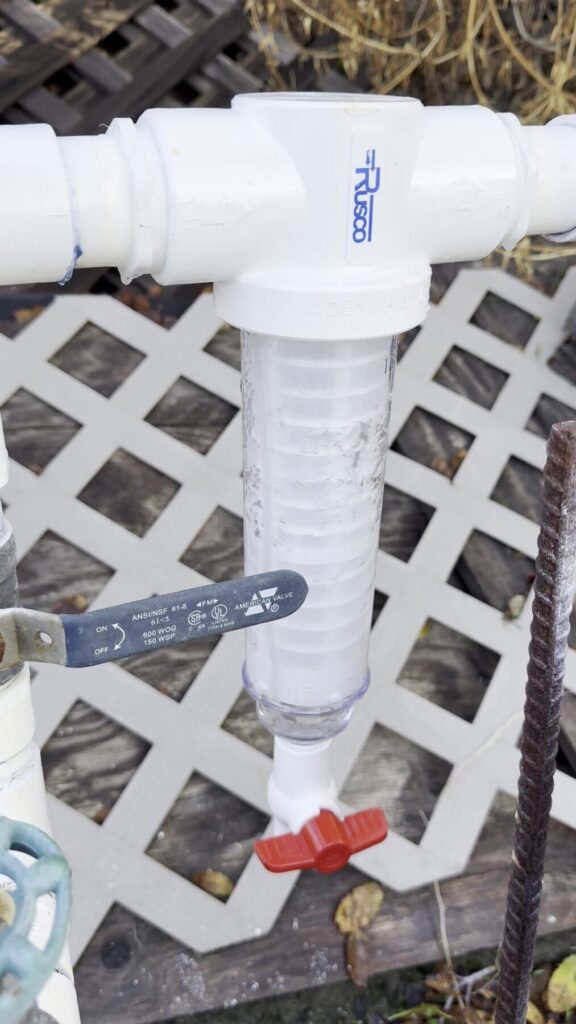
If your water carries visible sand or grit, a spin-down sediment filter is often the first stage. It catches larger particles before they reach your fixtures, your water heater or the finer treatment equipment downstream.
Carbon filtration
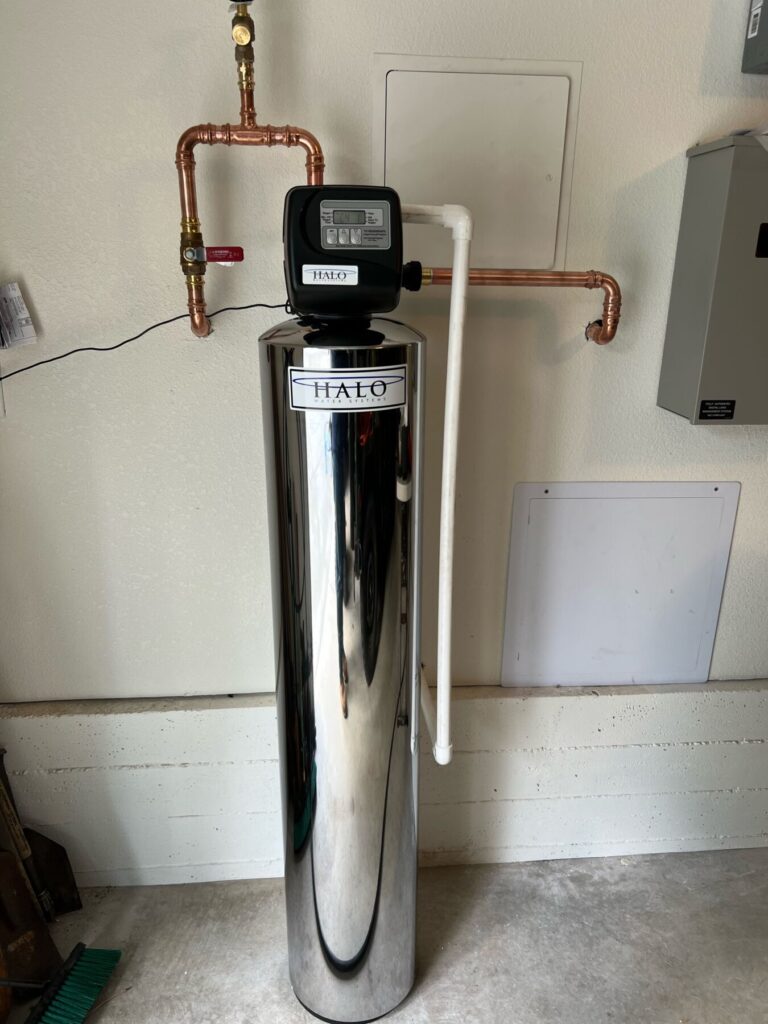
Carbon filtration is commonly used to reduce chlorine and improve taste and odor. Different carbon media suit different conditions, and specialized media can target chloramine, hydrogen sulfide or other specific goals. Carbon can treat the whole house or a single drinking-water tap, and it’s often combined with sediment filtration or softening.
Water Softeners and Hard-Water Treatment
Hard water leaves mineral deposits on fixtures and glass, and it builds scale inside water heaters and other appliances. As water heater specialists, we see what that scale does to a tank or a tankless heat exchanger: lower efficiency and a shorter life.
We install conventional water softeners as well as salt-free scale-control and conditioning systems when they’re a better fit. The right choice depends on your water hardness, iron content, household demand, available space, how much maintenance you want, and what you’re trying to accomplish. When iron or other well-water problems are present, a softener may be only one part of the solution.
Related: Tankless water heaters · Tank water heaters
Iron, Sulfur and Backwashing Media Filtration
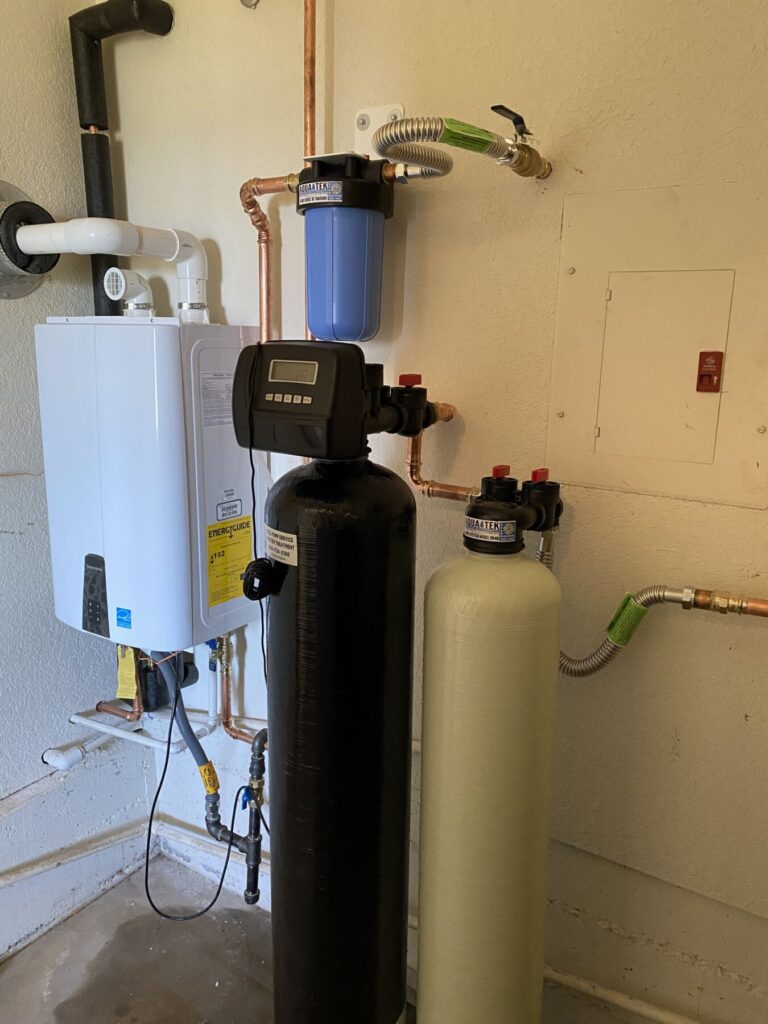
Some well-water problems need more than a softener or a cartridge filter. Automatic backwashing media filters can be configured with different treatment media to address elevated iron, sediment, chlorine and chloramine, hydrogen sulfide (the “rotten egg” smell), pH correction and other specific conditions. They periodically backwash to clean the treatment bed, and they can be combined with softening and prefiltration when several problems are present.
Arsenic and Contaminant-Specific Treatment
Some contaminants require treatment chosen specifically for them. A general-purpose filter shouldn’t be assumed to fix a contaminant-specific problem.
When arsenic or another contaminant is present, we review independent test results before recommending equipment. Treatment media, system size, water chemistry and household flow all have to be considered.
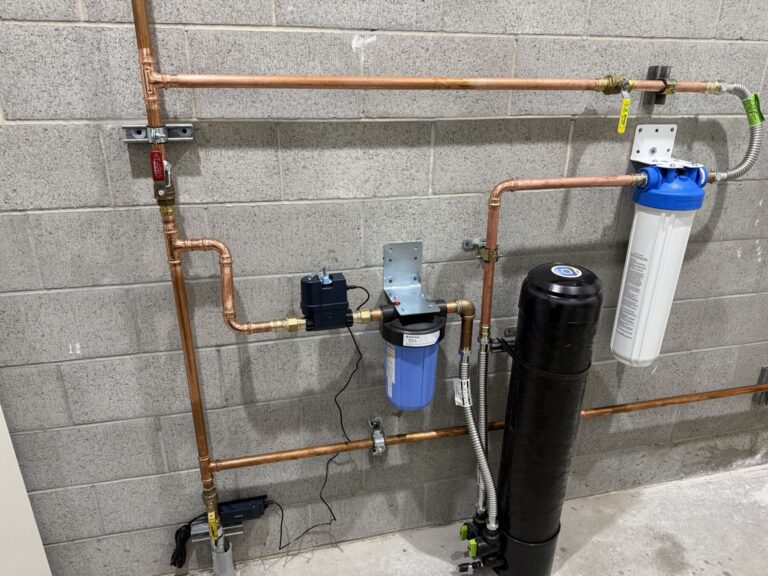
One customer called us after lab testing of the water at their newly built lake house showed arsenic at roughly 25 times the allowable level. We researched the available treatment options and installed a whole-house system with prefiltration, arsenic-specific treatment, monitoring and shutoff equipment, and bypass piping for future service.
That project is a good example of how we work: identify the problem, evaluate the options, and install treatment designed around the actual water.
Drinking Water: Point-of-Use and Reverse Osmosis
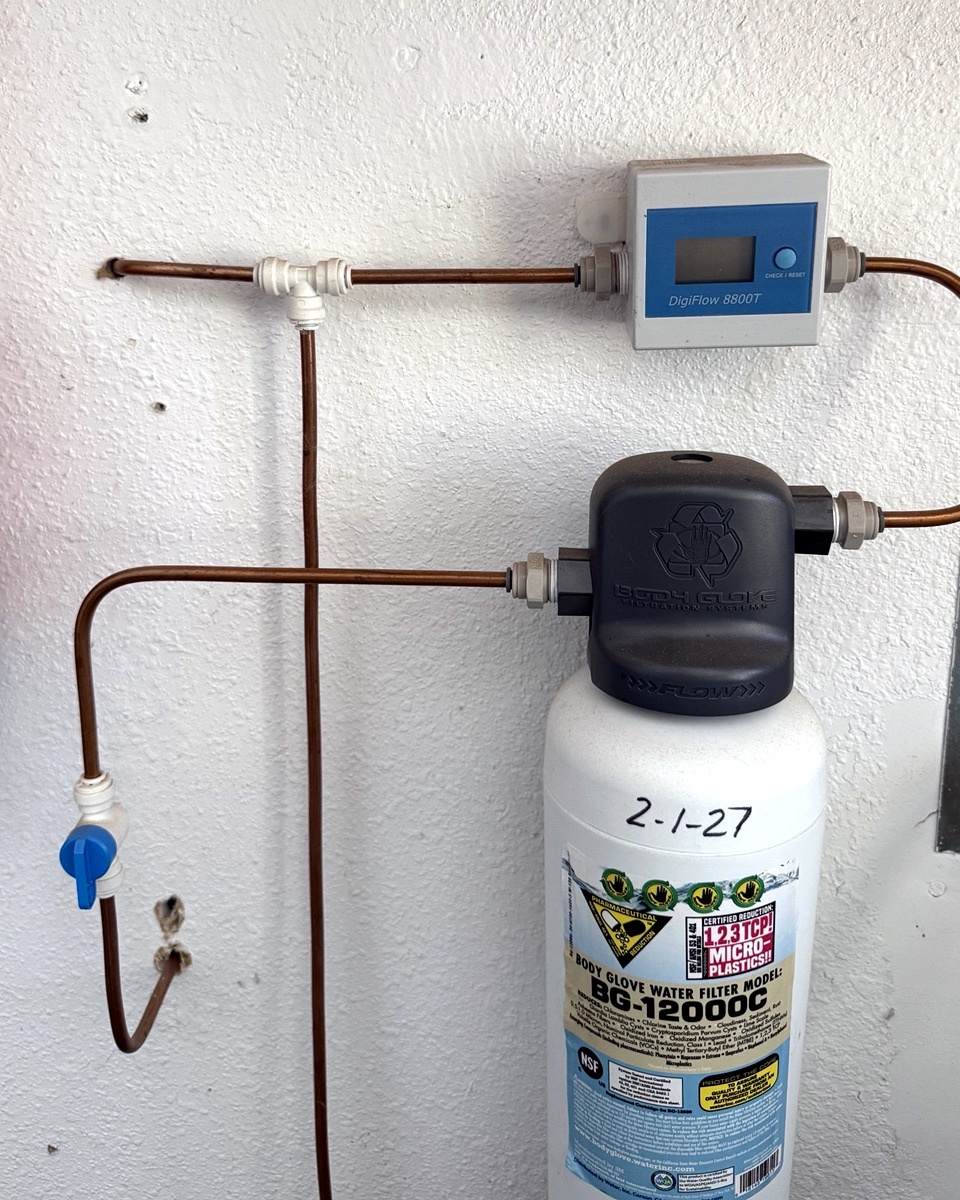
Not every problem requires whole-house treatment. A point-of-use filter treats water at one location, usually the kitchen sink or a dedicated drinking-water faucet. Depending on the filter and its independent certifications, it may reduce chlorine taste and odor, fine particles, lead, certain volatile organic compounds, cysts, or other contaminants it has been tested and certified for. Filters vary widely, so we match the filter’s certified performance to your treatment goal.
Reverse osmosis (RO) systems go further. They use a membrane plus additional filter stages to reduce dissolved substances that cartridge filters don’t address. RO is a good choice when you want a higher level of treatment for drinking and cooking water without treating every gallon used in the house.
Ultraviolet (UV) Treatment
UV treatment is used for microbiological concerns, particularly on private wells. It doesn’t replace sediment filtration or other treatment, and it may need pretreatment to work properly. If bacteria are a concern, testing should establish the condition of the water before equipment is selected.
Multi-Stage Systems
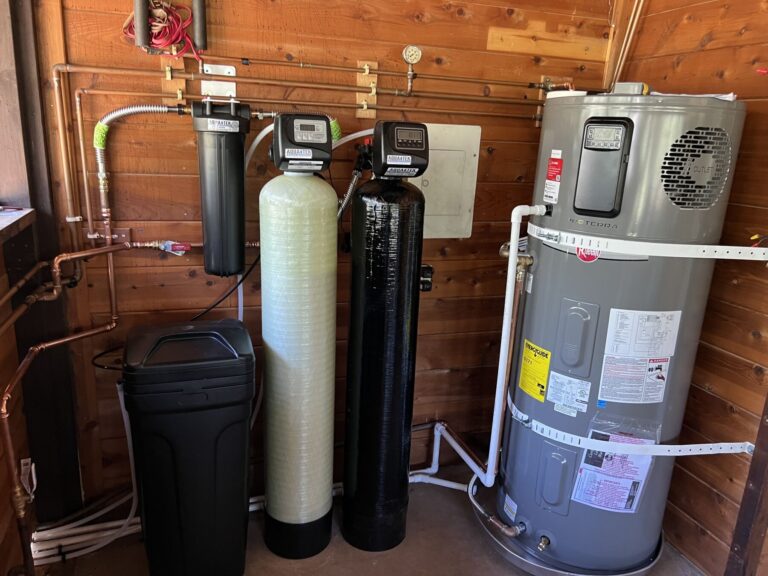
Many well-water problems involve more than one condition. A home might have sediment, iron and hardness at once; another might need carbon, contaminant-specific media and a drinking-water filter. The system at the top of this page combines cartridge prefiltration, backwashing media treatment and softening for exactly that reason.
The goal isn’t to install as much equipment as possible. It’s to choose the stages that make sense for your water.
Built for Service, Plus Help With Existing Systems
Treatment equipment needs periodic service, and the plumbing around it matters. We install proper bypass piping, isolation valves, drainage and service access so filters and equipment can be maintained or replaced later.
We also replace, modify, troubleshoot and service existing water-treatment systems, including ones we didn’t install.
Frequently Asked Questions
Serving Tuolumne and Calaveras Counties
Whether your home is on municipal water or a private well, the first step is understanding the problem you’re trying to solve. From there, we’ll help you evaluate the options and install a system that fits your water and your home.
- Call or text 209-743-9821
- Have your water test results handy if you have them