
Will a Hybrid Water Heater Fit? Why Heat Pump Water Heaters Are Bigger Than Gas Tanks
Replacing a conventional gas water heater with a hybrid heat pump water heater is not always a simple one-for-one swap.
Hybrid water heaters are often taller, larger and heavier than the gas water heaters they replace. Before ordering a unit, we look closely at the available space, access, required storage capacity and how the heater will actually be moved into position.
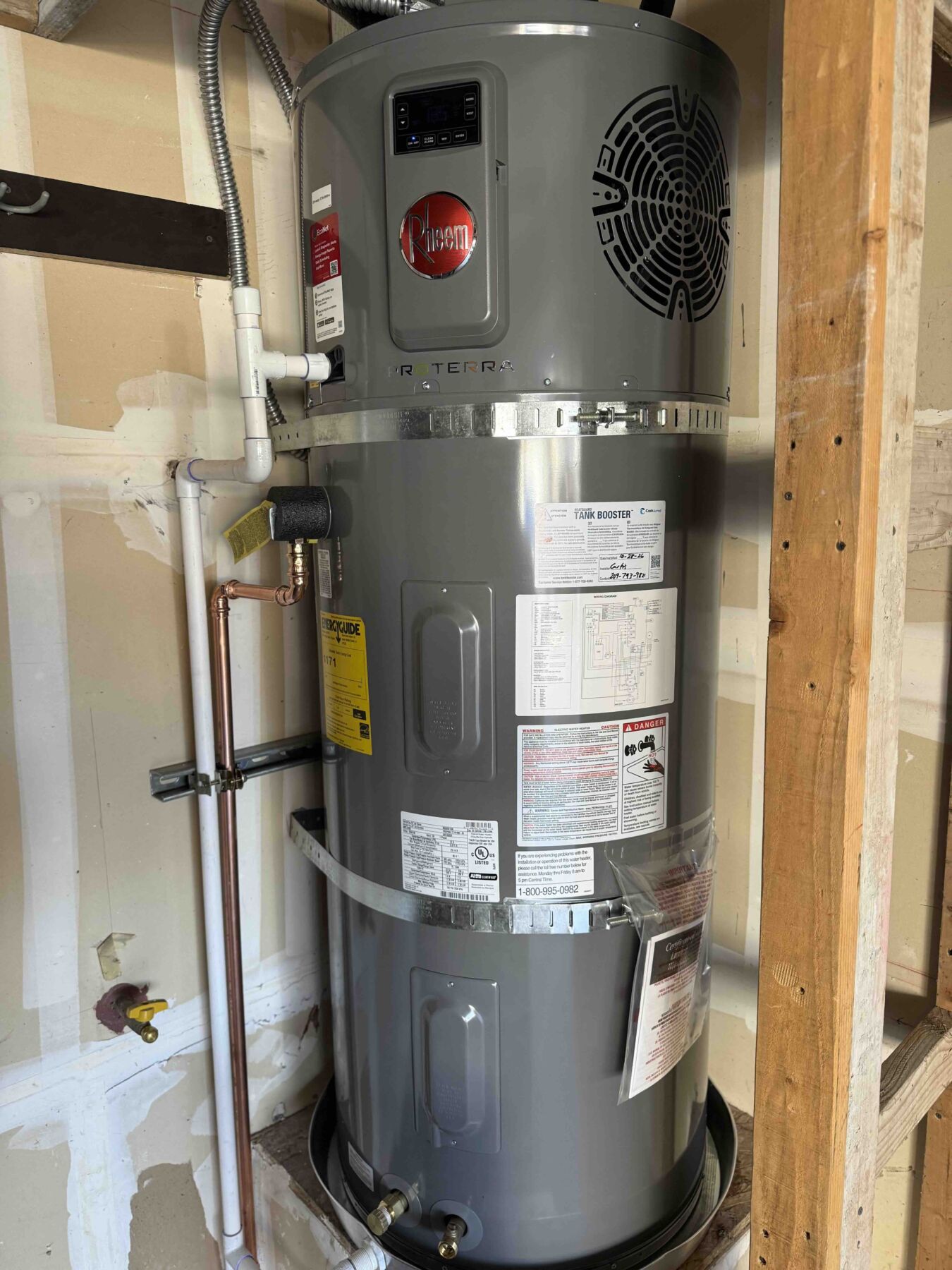
This recent Rheem ProTerra hybrid installation is a good example of why those details matter.
Why Hybrid Water Heaters Are Often Larger
A conventional gas water heater can recover hot water quickly because a gas burner can put a large amount of heat into the tank in a relatively short period of time.
A hybrid heat pump water heater operates differently.
During efficient heat-pump operation, the unit transfers heat from the surrounding air into the water. That process can use substantially less energy than creating heat with traditional electric resistance elements, but heat-pump-only recovery is generally slower than the recovery provided by a typical gas burner.
Because of that, homeowners converting from gas to a hybrid system often benefit from additional stored hot-water capacity.
A home that previously used a 40- or 50-gallon gas water heater may sometimes be better served by a 65- or 80-gallon hybrid, depending on the number of occupants and the household’s hot-water demand.
The larger tank provides additional stored hot water while allowing the system to take advantage of efficient heat-pump operation.
The Heat Pump Adds Height
Tank capacity is only part of the size difference.
A hybrid water heater also contains a heat pump, compressor and fan assembly at the top of the tank. That makes many hybrid units considerably taller than standard gas or electric water heaters.
Before recommending a hybrid system, we check things such as:
- Overall ceiling height
- Shelving and overhead framing
- Plumbing locations
- Electrical requirements
- Condensate drainage
- Service access
- Available air space
- The path required to move the new heater into position
Simply knowing that the old water heater fit in the space is not enough.
A Very Tight Fit on This Installation
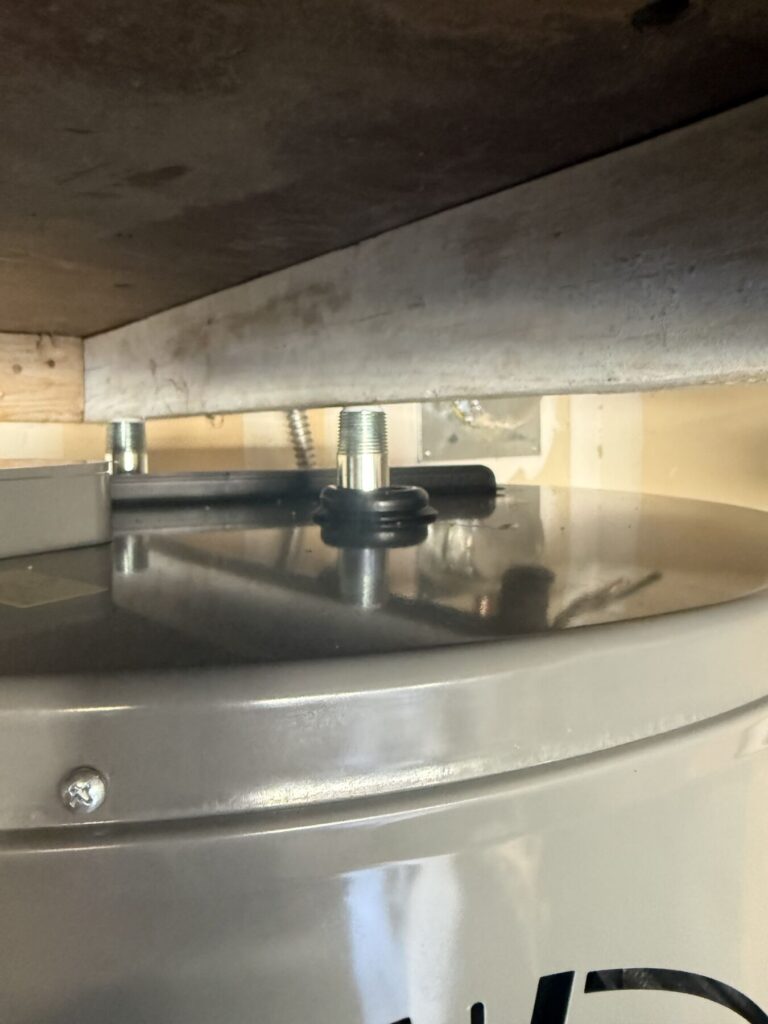
This installation had very little extra vertical clearance.
Once the new hybrid water heater was lifted into position, the top of the unit came extremely close to the existing structure above it.
That is exactly the type of condition we want to identify before installation.
Hybrid water heaters require access around the heat-pump assembly, and the final location still has to meet the manufacturer’s installation and service requirements. A few inches can determine whether a particular model will work in an existing space.
Careful measuring ahead of time helps avoid ordering a water heater that physically cannot be installed where the homeowner expects it to go.
Moving and Positioning a Large Hybrid Water Heater
Large-capacity hybrid water heaters are also heavy and awkward to maneuver.
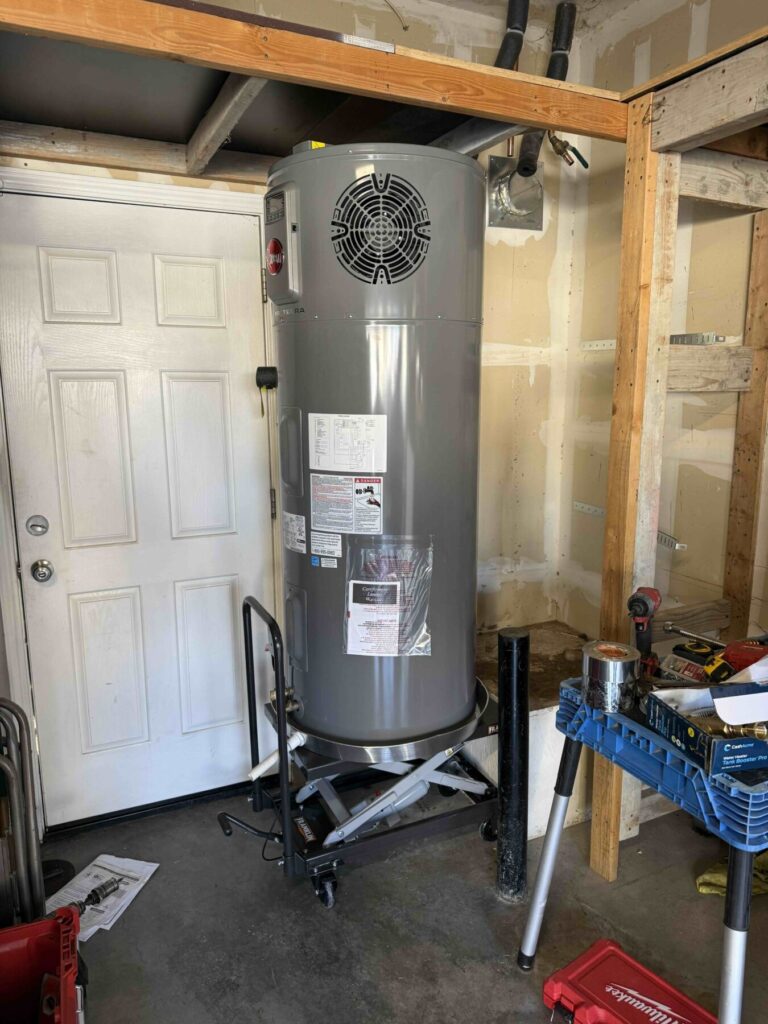
For this installation, we used lifting equipment to help raise and position the water heater safely.
The equipment itself isn’t unusual, but using the right tools becomes increasingly important as water heaters get larger and heavier.
Proper handling helps reduce the chance of damaging the new equipment, the surrounding structure or finished surfaces while also making it easier to accurately position the tank.
Bigger Does Not Necessarily Mean Less Efficient
It may seem counterintuitive to replace a smaller gas water heater with a physically larger tank.
But the larger storage capacity serves a different purpose.
The goal is not simply to install the biggest tank possible. The goal is to provide enough stored hot water that the heat pump can handle much of the normal heating load efficiently without the household constantly relying on faster backup heating.
Hybrid units also have electric resistance elements and operating modes that can provide additional recovery when needed.
The correct size depends on the household rather than simply matching the gallon capacity of the old water heater.
Measure Before You Buy
One of the most important parts of a gas-to-hybrid water heater conversion happens before the new water heater arrives.
We evaluate:
- Existing water-heater size
- Household hot-water demand
- Available vertical clearance
- Width and access into the installation area
- Electrical requirements
- Condensate drainage
- Air-space requirements
- Plumbing modifications
- Service access after installation
That planning helps determine whether a 50-, 65- or 80-gallon hybrid water heater is appropriate and whether the selected unit will physically work in the available space.
Considering a Hybrid Heat Pump Water Heater?
Hybrid heat pump water heaters can be an excellent option for homeowners looking to reduce the energy used for water heating, but the conversion should be planned around both the home’s hot-water demand and the physical installation space.
If you’re considering replacing a gas or conventional electric water heater with a hybrid heat pump water heater, Optimized Plumbing & Piping can evaluate the existing installation, compare available options and help determine the appropriate size for your home.
Optimized Plumbing & Piping
Professional water heater installation and replacement.