
65-Gallon Heat Pump Water Heater Installation: Planning, Protection & First-Pass Inspection
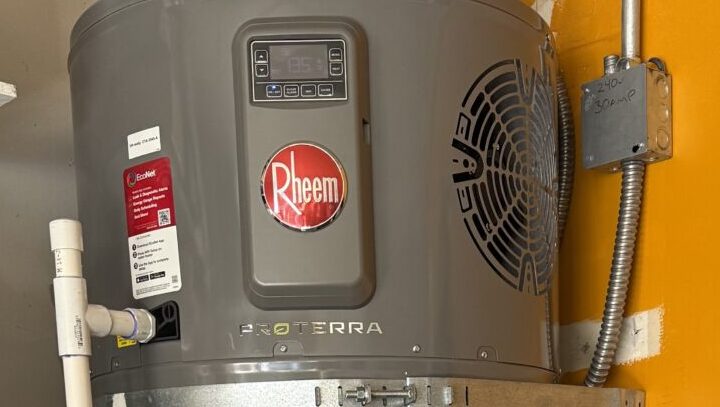
This Stockton project involved replacing an existing gas water heater with a 65-gallon Rheem ProTerra heat pump water heater.
This home was selected as one of the first installations in a larger group of heat pump water heater conversions because it had relatively clear access and fewer space restrictions than some of the other homes. Starting with a more accessible installation gave us an opportunity to work through the conversion process efficiently before moving into some of the tighter locations.
A 65-Gallon Heat Pump Water Heater Is Heavy
One of the less obvious challenges with these larger heat pump water heaters is simply getting them into position.
A 65-gallon ProTerra is a substantial piece of equipment. On this installation, the new heater had to be carefully lifted into a drain pan and then onto the existing water-heater stand.
That takes planning and careful handling. The goal isn’t just to get the heater into place — it’s to get it there without damaging the cabinet, drain pan, surrounding walls or any of the new equipment.
We were able to get the new unit onto the stand and into its final position in perfect condition.
Upgrading the Drain Pan
While installing the new heater, we upgraded the drain pan beneath the unit.
A water heater is expected to remain in place for many years, so the area underneath it matters. A properly installed pan can provide another layer of protection if a leak develops in the future and can help reduce the risk of water damage around the installation.
With a large, heavy water heater sitting on a raised stand, this is also something that is much easier to address correctly during the installation than afterward.
Checking the Water System Before Adding an Expansion Tank
Before the installation, we checked with Cal Water regarding the home’s water service.
We confirmed that there was no backflow device creating a closed water system at this property, so an expansion tank was not installed as part of this particular conversion.
That is a good example of why we evaluate each home individually rather than automatically installing the exact same components on every project.
Keeping Hot-Water Downtime Short
Replacing a gas water heater with a heat pump model involves more work than a straightforward tank replacement, but we also try to minimize the time the homeowner is without hot water.
On this installation, the homeowner had approximately three hours of hot-water downtime while the conversion was completed.
Planning the work ahead of time, having the necessary materials ready and coordinating the installation sequence helps keep that interruption as short as practical.
Passing Inspection the First Time
The installation passed inspection on the first visit.
That matters on an electrification project because a failed inspection can mean another appointment, additional disruption for the homeowner and extra time before the project is completely finished.
Taking the time to plan the installation around the existing plumbing, equipment location, drainage and code requirements helped us get this one completed cleanly the first time.
Hear From the Homeowner
Miguel shared a few words about his experience after the installation in the video above.
Real homeowner feedback is especially useful with heat pump water heaters because many customers are seeing this type of equipment for the first time. There can be questions about operation, recovery, noise, efficiency and how the new system differs from the gas water heater it replaced.
We take the time to explain the new equipment and answer those questions before we leave.
Heat Pump Water Heater Installation
Optimized Plumbing & Piping primarily serves Sonora, Tuolumne County and surrounding Sierra foothill communities. We also perform select heat-pump-water-heater and electrification projects outside our normal service area.
If you’re considering replacing a gas water heater with a heat pump water heater, we can evaluate the existing plumbing, available space, drainage and installation requirements to determine what will be needed for a proper conversion.