
Heat Pump Water Heater Installation: Stand Removal, Electrical & Mixing Valve
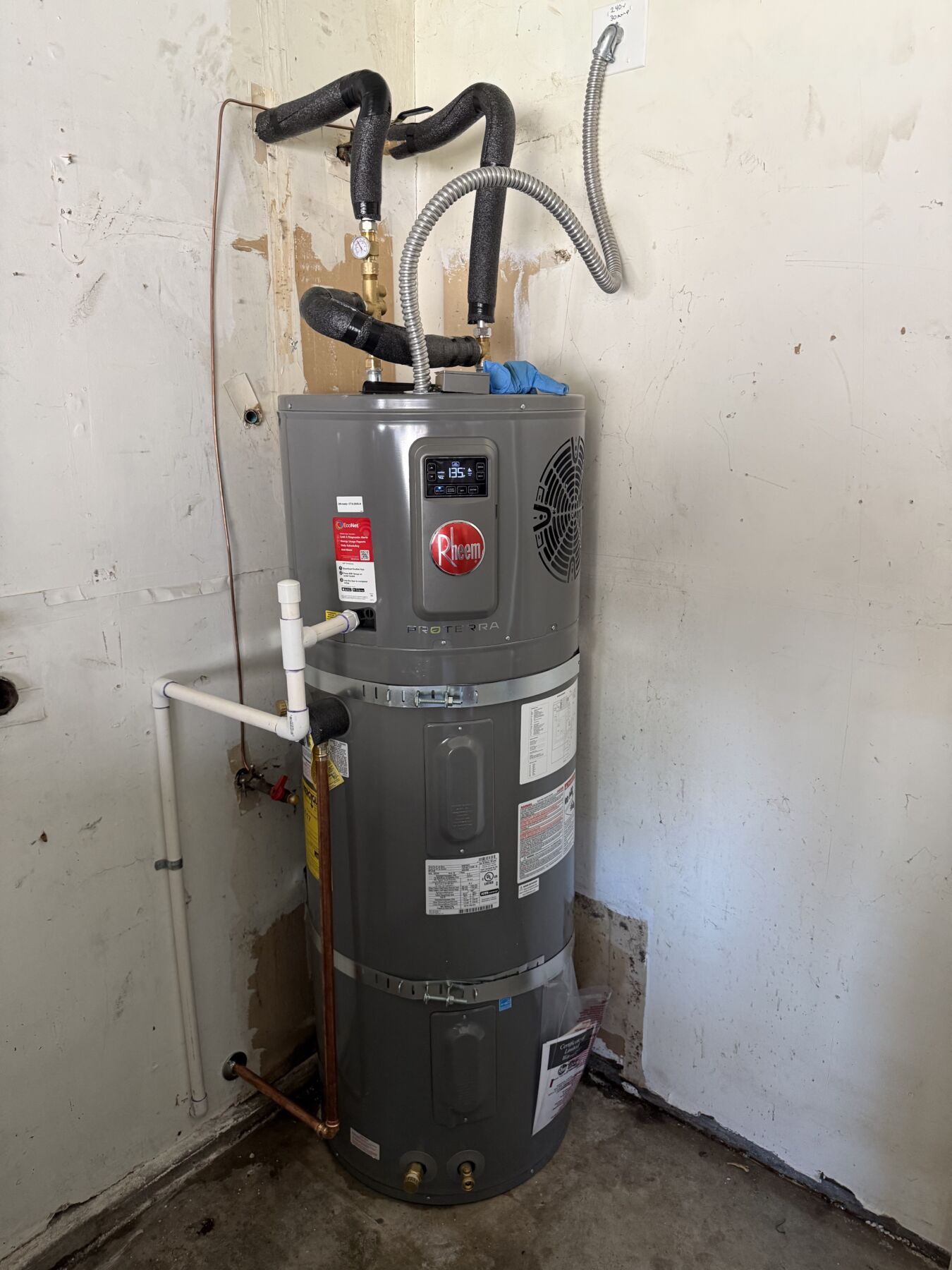
We recently completed another gas-to-electric water heater conversion in Stockton, California, replacing the existing gas water heater with a Rheem ProTerra heat pump water heater.
Every conversion is a little different. On this project, three of the main considerations were removing the existing water-heater stand, coordinating the new electrical circuit with an electrical contractor, and installing a mixing valve as part of the new system.
Removing the Existing Water Heater Stand
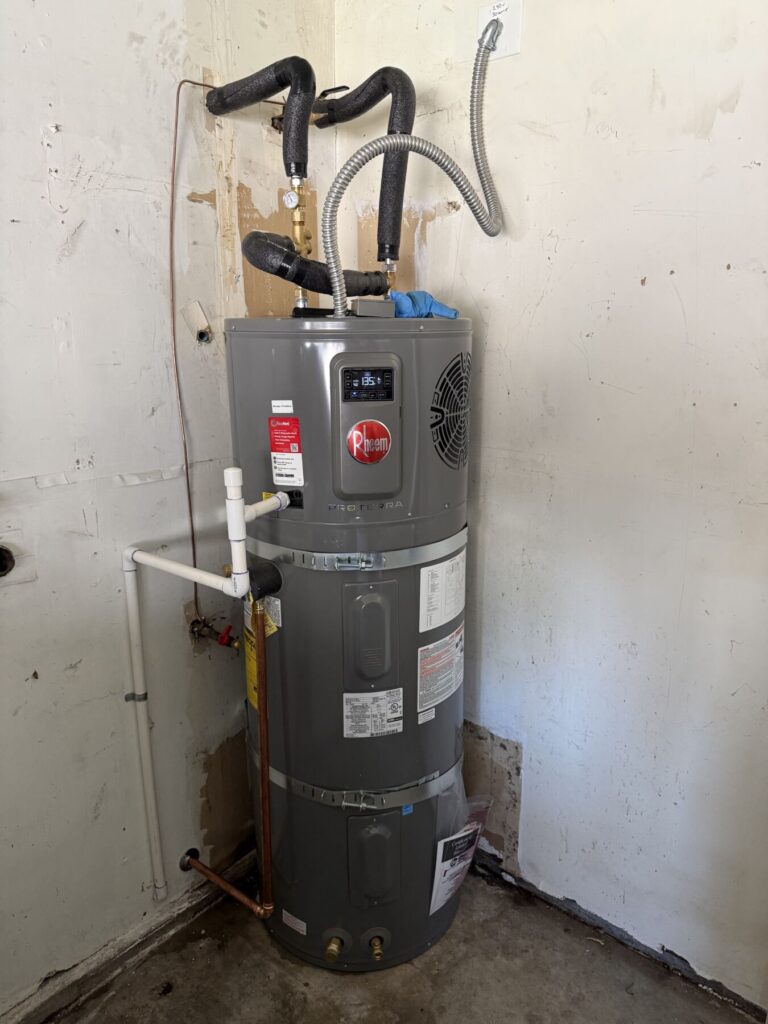
The previous gas water heater had been installed on a raised stand.
Because the new heat pump water heater did not need to remain on that platform, we removed the old stand and installed the new unit at floor level.
That gave us a cleaner installation and helped make better use of the available vertical space for the taller heat pump water heater, piping and connections.
Whenever an existing stand is removed, we also have to look at what is behind and underneath it and determine how the new piping and drainage will be routed once the old installation is gone.
Coordinating the New Electrical Circuit
One major difference between a gas water heater and a heat pump water heater is the electrical requirement.
For this project, we coordinated with the electrical contractor so the proper circuit and connection were in place for the new Rheem ProTerra before the plumbing installation was completed.
That coordination matters. The plumber and electrician each have their own scope, but the finished system has to work together.
Planning the electrical location ahead of time helps prevent unnecessary conduit, awkward connections or having to move equipment after installation has already started.
Why We Installed a Mixing Valve
This installation also included a thermostatic mixing valve.
A mixing valve blends hot water from the water heater with cold water before it is distributed to the home.
Depending on the installation and water-heater sizing strategy, this can allow the tank to store water at a higher temperature while delivering tempered water to the plumbing system. This allows the tank to act a little like a battery for heat- a tank full of hotter water can provide even more usable gallons when mixed down to a safe delivery temperature.
It is another component that needs to be installed and adjusted correctly, and it adds some piping complexity compared with a basic water-heater replacement.
Planning the Whole Conversion
Changing from a gas water heater to a heat pump model means looking at the entire installation rather than simply swapping tanks.
Some of the items we evaluate include:
- Electrical requirements
- Water-heater size and recovery
- Available airflow
- Condensate drainage
- Existing hot- and cold-water piping
- Mixing-valve requirements
- Existing gas venting
- Platforms or stands
- Available service and maintenance clearances
Working through those details before and during the installation usually produces a cleaner finished project and fewer surprises for the homeowner.
What the Homeowner Said
After the installation, the homeowner left Optimized Plumbing & Piping a 5-star Google review:
“Very nice clean professional job, they took the time to answer all my questions I had about the new electric water heater they installed in my house. Thank you.”
Heat pump water heaters operate differently from the gas water heaters many homeowners are accustomed to, so answering questions and explaining the new equipment is an important part of the installation.
Heat Pump Water Heater Installation
Optimized Plumbing & Piping primarily serves Sonora, Tuolumne County and surrounding Sierra foothill communities. We also perform select heat-pump-water-heater and electrification projects outside our normal service area.
If you’re considering replacing a gas water heater with a heat pump water heater, we can evaluate the existing plumbing, electrical requirements, drainage and installation space to determine what will be required for the conversion.