
Gas to Heat Pump Water Heater Conversion: Rheem ProTerra Installation
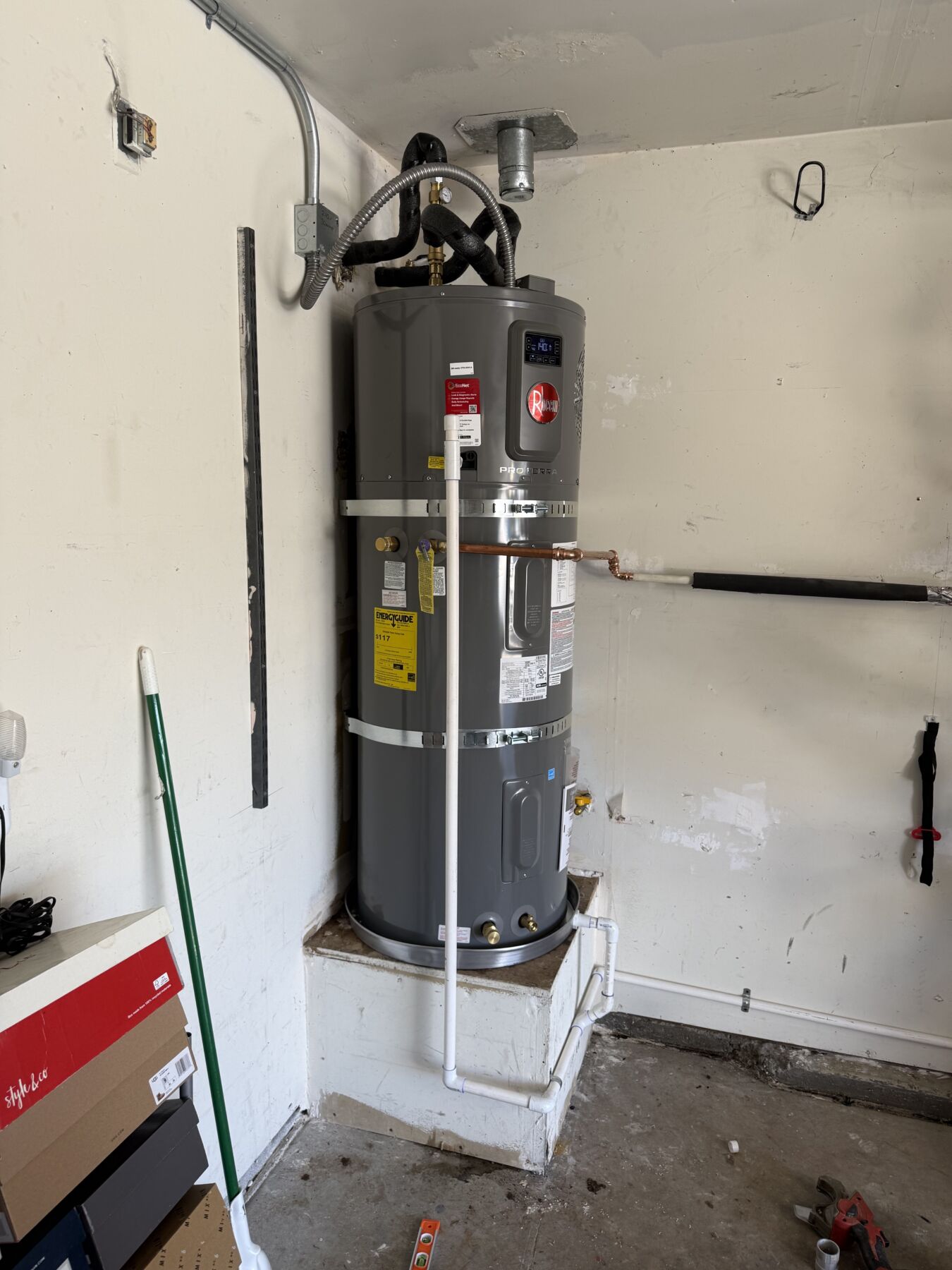
We recently completed this gas-to-electric water heater conversion in Stockton, California, replacing a conventional gas-fired water heater with a Rheem ProTerra heat pump water heater.
Heat pump water heaters can be a great option, but a good installation involves more than simply setting a new tank in place. On this project, we spent some extra time thinking through how the new piping and condensate drain would affect the homeowner’s use of the garage after we were gone.
Keeping the Garage Usable
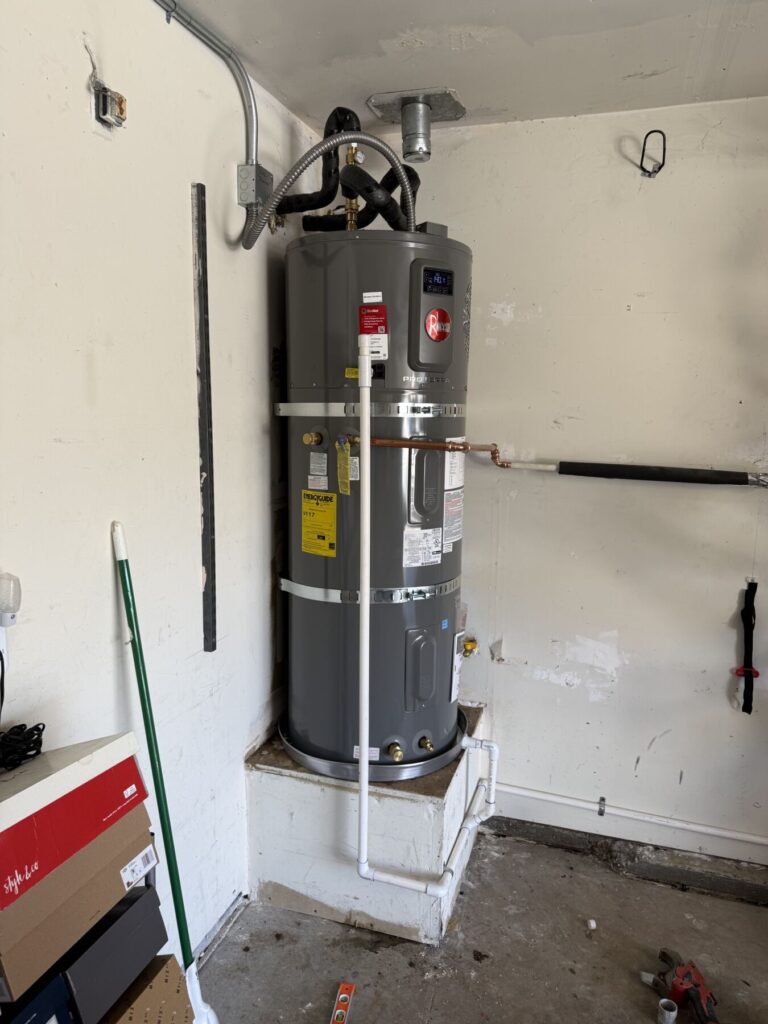
The homeowner had bike racks along the garage wall, so we routed the new condensate piping tight to the wall rather than letting it project farther into the usable space.
We also could have taken the shortest route and terminated the condensate near the front sidewalk and porch. Instead, we extended the drain roughly another 10 feet and terminated it near a flower bed.
That kept condensate water away from an area where the homeowners regularly walk and gave the installation a cleaner finished result.
These are small decisions during an installation, but they can make a noticeable difference in how the finished system works with the home.
Clean PVC Work Matters Too
The condensate piping was installed in PVC, including the required primer and cement at the joints.
Purple PVC primer makes it easy for an inspector to verify that primer was used, but it can also make an otherwise clean installation look sloppy if it is allowed to run down the pipe.
We take the extra time to keep those joints neat while still leaving clear evidence that the piping was properly primed and assembled.
Taking Care of Existing Plumbing
While completing the water heater work, we also replaced an existing shutoff valve and corrected a minor leak we found on the hot-water piping.
Those items were straightforward to address while the system was already shut down and our tools were set up.
Every project is different, and additional repairs outside the original scope may require approval or additional charges. In this case, these were minor items that made sense to address while we were already working on the system.
What Goes Into a Gas-to-Heat-Pump Conversion?
Replacing a gas water heater with a heat pump model requires several things to be evaluated, including:
- Electrical requirements
- Available airflow around the heat pump
- Condensate drainage
- Existing hot- and cold-water piping
- Existing gas venting
- Water-heater sizing and recovery
- The physical layout of the garage or installation area
A heat pump water heater does not require a combustion vent because there is no gas burner. However, the old venting still needs to be evaluated and properly abandoned or modified depending on the existing installation.
The heat pump also produces condensate while operating, similar to an air-conditioning system, which means the location and routing of that drain should be planned as part of the installation rather than treated as an afterthought.
What the Homeowner Said
After the installation, the homeowner left Optimized Plumbing & Piping a 5-star Google review and posted a photo of the completed installation:
“Curtis was on time and professional, work is clean and explained the plan and things that has to be done.”
Read the Google review
Heat Pump Water Heater Installation
Optimized Plumbing & Piping primarily serves Sonora, Tuolumne County and surrounding Sierra foothill communities. We also perform select heat-pump water-heater and electrification projects outside our normal service area.
If you’re considering replacing a gas water heater with a heat pump water heater, we can evaluate the existing installation and determine what would be required for a proper conversion.