Tankless Water Heater Recirculation: Dedicated Return Line vs. NaviCirc Crossover Valve
One of the biggest improvements that can be made to a tankless water-heater system has nothing to do with how much hot water the heater can produce.
It is how quickly that hot water reaches the fixture.
In a larger home, there may be a significant amount of piping between the water heater and the farthest bathroom or kitchen fixture. Without recirculation, all of the cooled water sitting in that hot-water pipe has to run down the drain before freshly heated water reaches the faucet.
A properly designed hot-water recirculation system can greatly reduce that wait.
With many Navien tankless systems, we generally have two options:
- A dedicated hot-water recirculation return line
- A NaviCirc crossover valve when a dedicated return line is not available
Both can improve hot-water delivery, but when the plumbing allows it, we generally prefer a dedicated return line for the best overall performance.
Why Hot Water Takes Time to Reach a Faucet
When nobody has used hot water for a while, the water sitting inside the hot-water piping gradually cools.
The next time someone opens a hot-water fixture, that cooled water has to leave the pipe before newly heated water from the tankless unit can arrive.
The farther the fixture is from the water heater, and the larger the piping system, the longer that wait can be.
This isn’t necessarily a limitation of the tankless water heater itself.
The tankless unit can begin heating water very quickly, but it still has to move that heated water through all of the piping between the heater and the fixture.
Recirculation addresses the piping problem.
How Tankless Recirculation Works
Instead of allowing hot water to sit in the piping until someone opens a faucet, a recirculation system periodically moves water through the hot-water system and back toward the water heater.
That keeps heated water much closer to the fixtures.
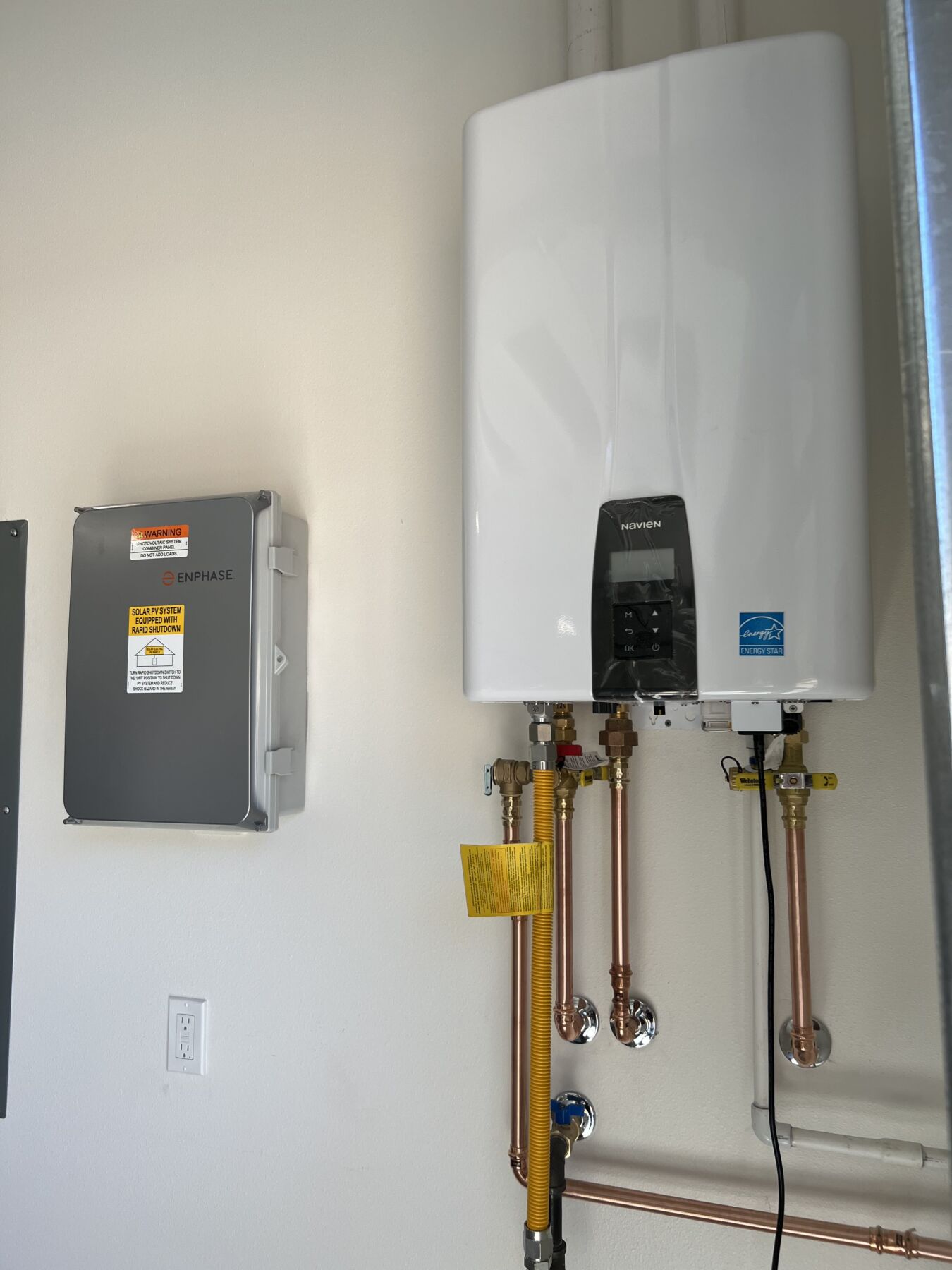
Many Navien tankless models are available with an internal recirculation pump, allowing the recirculation system to be integrated directly into the water heater rather than requiring a completely separate external pump arrangement.
How the water returns to the heater depends on how the house is plumbed.
That is where the difference between a dedicated return line and a crossover valve becomes important.
Dedicated Hot-Water Recirculation Return Line
A dedicated return system uses an additional pipe specifically for recirculation.
The hot-water supply travels out through the house toward the fixtures, and a return pipe brings the recirculating water back to the water heater.
This creates a true circulation loop.
When we have the ability to install or use an existing dedicated return line, this is generally our preferred approach.
Why We Prefer a Dedicated Return When Feasible
A properly designed dedicated return gives us the greatest control over how hot water circulates through the home.
The cold-water piping remains dedicated to cold water, while the recirculation water has its own path back to the heater.
This is particularly attractive in:
- New construction
- Major remodels
- Homes with accessible crawlspaces
- Homes with accessible attics
- Houses already equipped with a return line
- Projects where walls are already open
If running the additional pipe is reasonably practical, we usually prefer doing it that way.
The result is a purpose-built hot-water circulation system rather than using another pipe in the home for two different functions.
What If the House Does Not Have a Return Line?
Most existing homes were not originally plumbed with a dedicated hot-water return.
Adding one after the house is finished can sometimes require opening walls, entering difficult crawlspaces or making other modifications that simply do not make financial sense.
That does not necessarily mean the homeowner has to give up on recirculation.
This is where a NaviCirc crossover valve can be useful.
How a NaviCirc Crossover Valve Works
The NaviCirc valve is typically installed beneath a fixture located near the far end of the hot-water piping system.
Instead of installing a separate return pipe all the way back to the tankless water heater, the system temporarily uses the home’s existing cold-water line as the return path.
The tankless heater’s recirculation pump moves water through the hot-water piping toward the NaviCirc valve and then back toward the heater through the cold-water piping.
The valve responds to water temperature and stops the crossover flow once sufficiently warm water reaches it.
This allows many existing homes to gain the benefits of hot-water recirculation without installing a dedicated return pipe.
The Big Advantage of NaviCirc: Retrofit Simplicity
For an existing finished home, the biggest advantage is obvious.
We may be able to add recirculation without:
- Opening walls throughout the house
- Running a completely new return pipe
- Removing finished ceilings
- Performing major drywall repairs
- Accessing difficult areas of the structure
That can make the difference between a recirculation upgrade being practical or being prohibitively expensive.
For the right home, NaviCirc is a very useful retrofit solution.
Why a Dedicated Return Is Still Our First Choice
Although NaviCirc works well in many retrofit applications, we still prefer a dedicated return line when installing one is practical.
With a dedicated return:
- The recirculation system has its own piping path
- The cold-water line remains exclusively cold-water piping
- We have greater flexibility in designing the circulation loop
- The system is purpose-built around recirculation from the beginning
That does not mean every existing house should be torn apart to install a return line.
It means that when we are building, remodeling or already have good access, we think it is worth considering the dedicated line rather than automatically relying on a crossover valve.
Recirculation Does Not Mean the Pump Has to Run Constantly
A common misconception is that a recirculation system needs to operate continuously.
That is not necessarily the goal.
Modern tankless controls can allow recirculation strategies based on the equipment and installation, helping balance hot-water convenience with energy use.
The ideal setup depends on how the household actually uses hot water.
A family with predictable morning and evening schedules may need something different from a home where hot water is used intermittently throughout the entire day.
The objective is to reduce unnecessary waiting without operating the system more than necessary.
Recirculation Can Reduce Wasted Water
Without recirculation, homeowners may run a shower or sink for a significant period while waiting for hot water to arrive.
All of that cooled water goes down the drain even though there is nothing wrong with it.
By keeping hot water closer to distant fixtures, recirculation can reduce the amount of water wasted during that waiting period.
This can be especially noticeable in larger homes where bathrooms are located far from the water heater.
Recirculation Should Be Considered During the Tankless Installation
The best time to think about recirculation is often when the tankless water heater is being selected and installed.
We look at:
- Location of the tankless water heater
- Location of the farthest hot-water fixtures
- Existing hot- and cold-water piping
- Whether a dedicated return line already exists
- Whether a new return can reasonably be installed
- Household hot-water usage
- Accessibility beneath sinks
- Home layout and piping length
That allows us to decide whether a dedicated return, NaviCirc system or no recirculation at all makes the most sense.
New Construction and Remodels: Plan Ahead
For new construction or a significant remodel, we strongly recommend considering a dedicated recirculation line while the plumbing is accessible.
The additional piping is generally much easier to install before walls and ceilings are finished.
Even if the homeowner does not immediately plan to use recirculation, having the piping available can provide options later.
Retrofitting that same return line after the house is completely finished can be considerably more difficult.
Which Recirculation System Is Right for Your Home?
For us, the general preference is straightforward:
If a dedicated return line already exists or can reasonably be installed, that is usually our preferred system.
If the home is finished and adding a return line would require substantial demolition or expense, a NaviCirc crossover valve can provide a practical way to reduce hot-water wait times using the existing piping.
The right answer depends on the house.
We do not recommend opening finished walls simply to install a dedicated return when a crossover solution will meet the homeowner’s needs.
But when we have the opportunity to design the system properly from the beginning, we generally choose the dedicated return.
Tankless Water Heater Recirculation & Installation
Optimized Plumbing & Piping installs and services tankless water heaters and hot-water recirculation systems.
When installing a tankless system, we can evaluate the existing plumbing and determine whether a dedicated recirculation line, NaviCirc crossover system or standard non-recirculating installation makes the most sense.
The goal is not simply continuous hot water.
It is delivering that hot water where it is needed with as little unnecessary waiting as practical.
Optimized Plumbing & Piping
Tankless water heater installation, recirculation and service.