Tankless vs. Direct-Vent Tank Water Heater: Cost, Efficiency, Propane & Space
When a gas or propane water heater needs replacement, many homeowners assume replacing it with another tank will automatically be the least expensive option.
That is often true with a basic atmospheric-vent water heater.
But when the existing water heater is a direct-vent or power-vent tank, the price difference between installing another comparable tank and upgrading to a high-efficiency tankless water heater can sometimes be much smaller than homeowners expect.
At that point, it is worth comparing more than just the initial equipment price.
Efficiency, propane use, available space, hot-water performance and the expected life of the new system can all affect which option makes more sense.
Why Direct-Vent Tanks Can Cost More Than Basic Tank Water Heaters
Not all tank-style gas water heaters are alike.
A basic atmospheric-vent water heater uses natural draft to vent combustion gases through a chimney or vent system.
Direct-vent and power-vent water heaters use more sophisticated venting arrangements and can cost considerably more than a basic atmospheric tank.
When one of these higher-cost tank systems needs replacement, we often compare the installed cost of another direct-vent tank with converting the home to a high-efficiency condensing tankless water heater.
Depending on the installation, the difference can be close enough that the homeowner may decide the advantages of tankless justify the additional cost.
Tankless Can Be Especially Attractive for Propane Homes
Many of the homes we work on throughout the foothills use propane rather than natural gas.
When fuel is relatively expensive, water-heater efficiency becomes more important.
A conventional tank maintains a supply of heated water throughout the day, even when nobody is using hot water.
A tankless water heater operates primarily when there is an actual demand for hot water.
Modern condensing tankless water heaters can also capture substantially more useful heat from the combustion process than many conventional atmospheric-vent storage water heaters.
That improved efficiency can be particularly attractive to homeowners who are paying for propane.
What Does ENERGY STAR Mean for Gas Water Heaters?
ENERGY STAR certification provides an independent efficiency standard rather than relying only on a manufacturer’s advertising claims.
Many of the high-efficiency condensing tankless water heaters we install are ENERGY STAR certified.
Typical conventional atmospheric-vent gas tank water heaters often do not meet the efficiency level required for current ENERGY STAR certification.
That does not mean an atmospheric tank is automatically a bad choice. It remains one of the simplest and least expensive ways to heat water in many homes.
But when a homeowner is comparing long-term fuel use—particularly with propane—the efficiency difference is worth considering.
Tankless Eliminates Standby Storage Losses
A tank-style water heater stores hot water around the clock.
Even with good tank insulation, some heat is continuously lost to the surrounding space and has to be replaced by the burner.
Tankless systems avoid maintaining 40 or 50 gallons of stored hot water all day.
When there is no hot-water demand, the burner generally is not operating simply to maintain a tank temperature.
That is one of the reasons tankless technology can reduce fuel consumption compared with many conventional storage systems.
Continuous Hot Water Is Another Major Difference
Efficiency is not the only reason homeowners choose tankless.
A properly sized tankless water heater can continue producing hot water for an extended period because there is no storage tank to deplete.
A conventional tank may provide a significant amount of hot water at first, but eventually the stored supply is used and the homeowner must wait for the tank to recover.
Tankless works differently.
As long as household demand remains within the unit’s available GPM and heating capacity, it can continue producing hot water.
This can be particularly useful for larger households, long showers and homes where hot-water use occurs back-to-back.
A Tankless Water Heater Uses Much Less Space
One of the most immediately noticeable differences is physical size.
A conventional storage water heater occupies floor space and may require a substantial portion of a utility room, garage or closet.
A tankless water heater mounts on the wall.
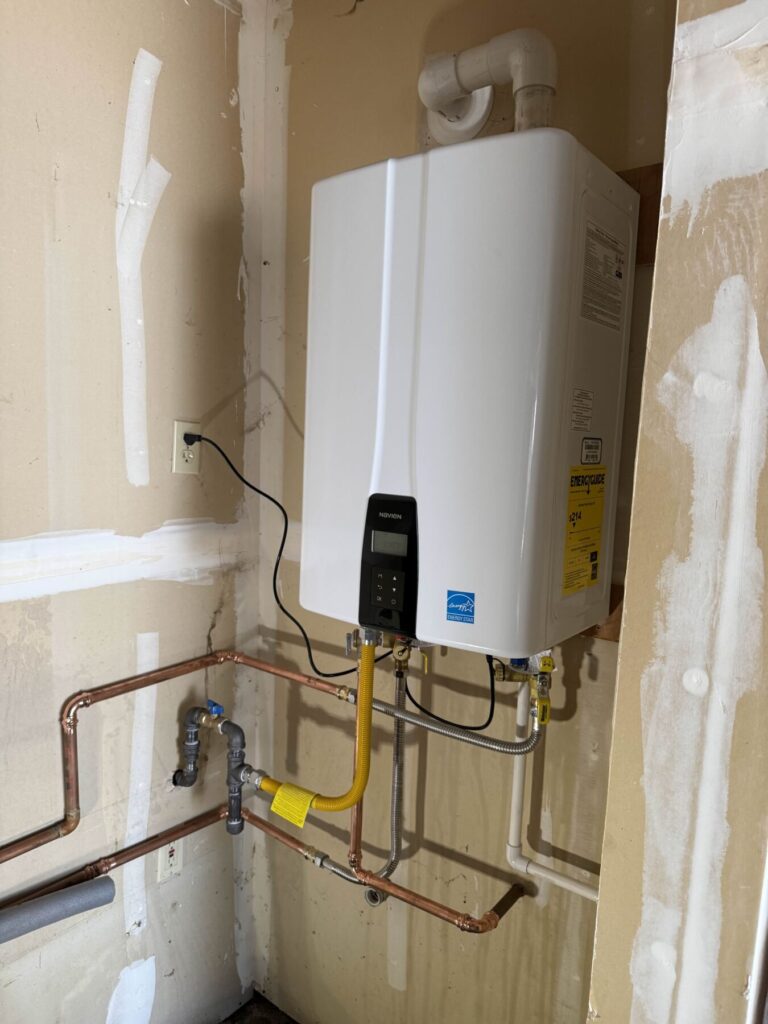
On the tank-to-tankless conversion shown here, removing the old storage tank opened up almost the entire footprint that had previously been dedicated to the water heater.
In some homes, converting to tankless can:
- Free up garage or utility-room floor space
- Make mechanical areas easier to access
- Create additional storage space
- Allow a water-heater closet to be repurposed
- Make better use of a small home or mechanical room
For homeowners where usable space is valuable, that can be a meaningful benefit.
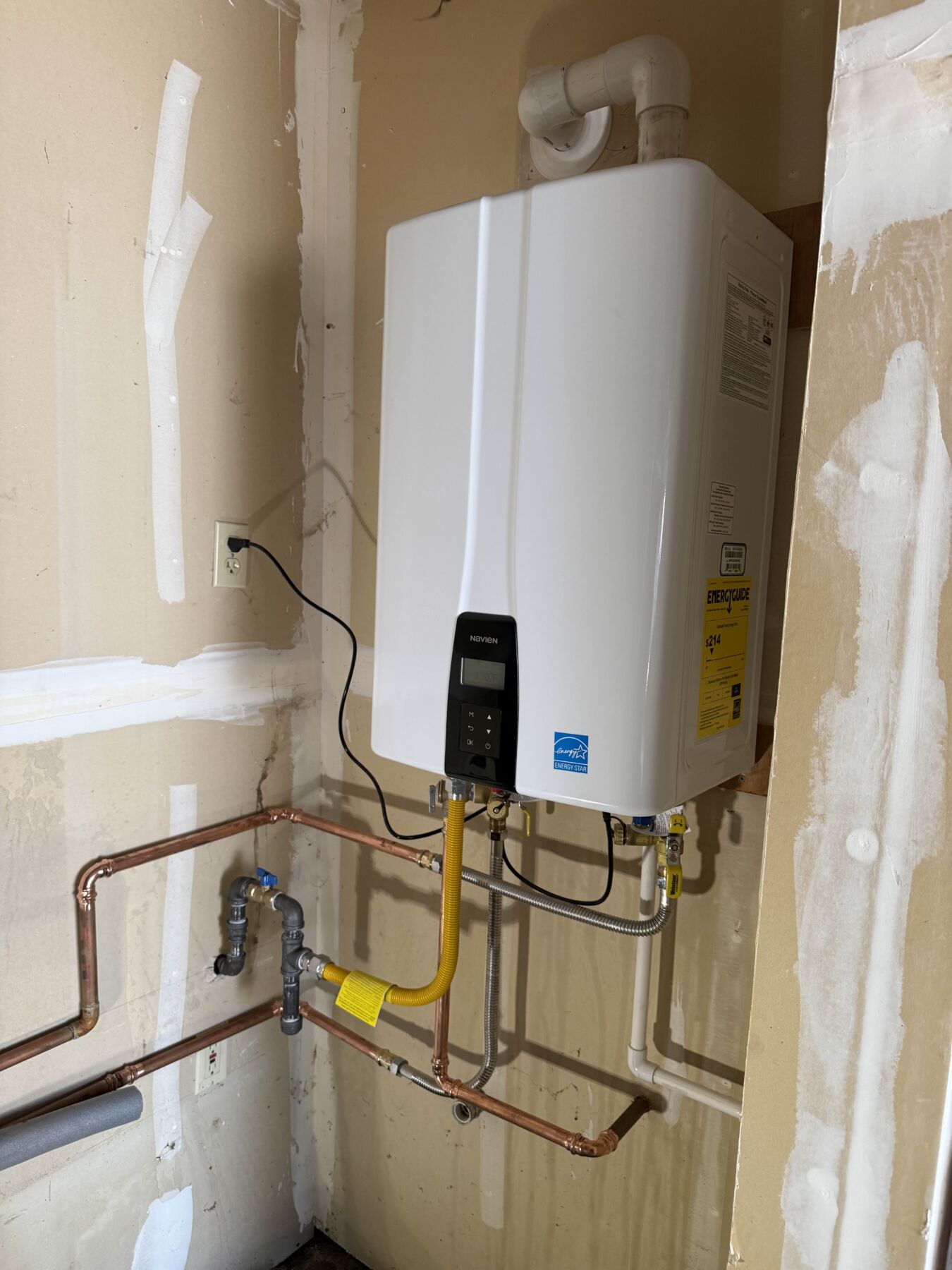
Before: Traditional Tank Water Heater
The original water heater in this installation occupied the floor and much of the available space around it.
Although the tank performed the same basic job of producing domestic hot water, its physical footprint limited how the surrounding area could be used.
When evaluating a tankless conversion, this is one of the things we consider along with fuel supply, venting and hot-water demand.
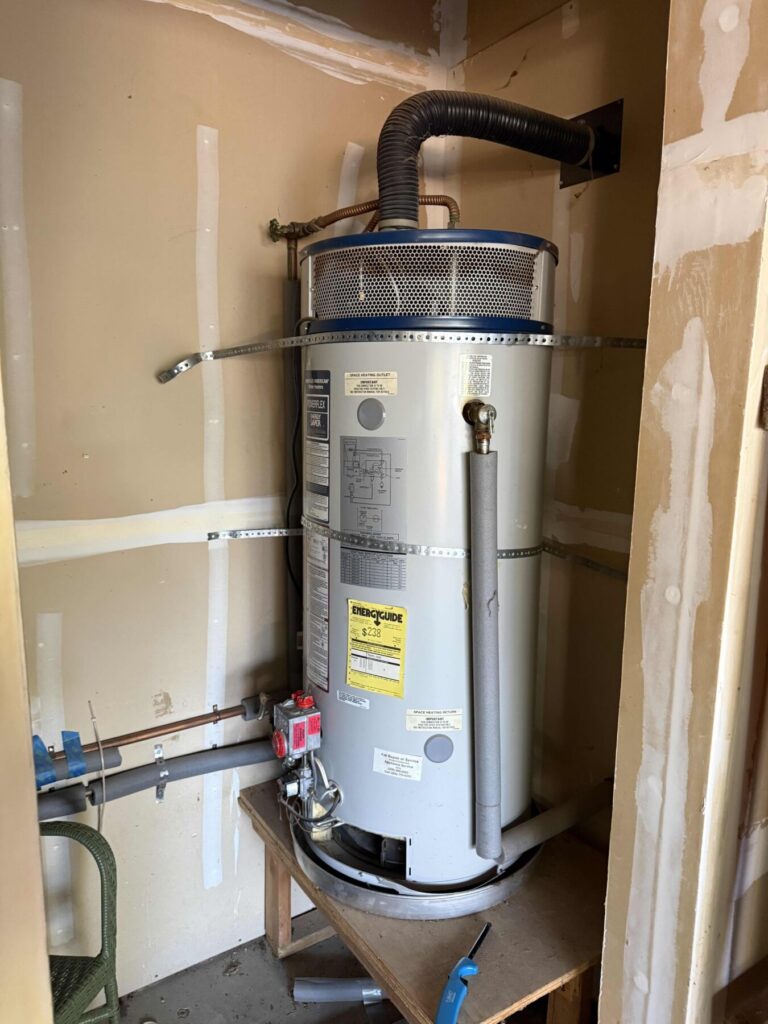
After: Wall-Mounted Tankless Water Heater
After removing the tank, we installed a wall-mounted Navien tankless water heater.
The new system provides hot water without requiring a large storage tank on the floor, leaving considerably more usable space below and around the unit.
This is one of the benefits that homeowners sometimes overlook when comparing water heaters strictly by purchase price.
Tankless Is Not Always the Cheapest Initial Option
There are situations where replacing an existing water heater with another standard tank is still clearly the lowest-cost option.
A tankless conversion may require additional work involving:
- Gas piping
- Venting
- Condensate drainage
- Electrical power
- Water piping
- Service valves
- Wall mounting
- Removal or modification of existing vent systems
Those items have to be considered when comparing installed prices.
We do not recommend tankless simply because it is newer technology.
The goal is to determine whether its advantages justify the cost for the particular home.
Why Gas Supply Still Matters
Tankless water heaters typically have much larger maximum burner inputs than conventional tank water heaters.
That means an existing gas line that worked perfectly well for the old tank may not automatically be adequate for the new tankless unit.
Before a conversion, we evaluate the existing gas system, including:
- Gas-pipe sizing
- Length of the run
- Other gas appliances
- Available pressure
- Propane regulator capacity when applicable
- Total connected BTU load
A high-efficiency tankless water heater can only deliver its rated performance if the gas system can supply it properly.
What About Condensate?
High-efficiency condensing tankless water heaters produce condensate as part of normal operation.
That condensate needs somewhere to drain.
Depending on the installation, we may be able to use a nearby gravity drain.
Other installations may require a condensate pump to move the water to an appropriate drainage location.
A condensate neutralizer may also be appropriate depending on the appliance, drainage system and installation conditions.
We evaluate those requirements as part of planning the conversion rather than treating the tankless unit as simply a wall-mounted replacement for the old tank.
Which One Makes More Sense?
There is no single answer for every home.
A conventional tank may make more sense when:
- Lowest possible upfront cost is the main priority
- Hot-water demand is modest
- The existing installation allows a simple replacement
- The homeowner prefers the simplicity of storage water heating
A tankless system may make more sense when:
- The existing direct-vent or power-vent tank is already expensive to replace
- The homeowner wants improved fuel efficiency
- The home uses propane
- Continuous hot water is important
- Floor or closet space is valuable
- The homeowner expects to remain in the house long enough to benefit from the upgrade
We prefer to compare the actual options rather than automatically replacing whatever equipment happened to be installed previously.
Tankless Water Heater Conversions
Optimized Plumbing & Piping installs and services tankless water heaters and converts existing gas and propane tank systems to tankless where the home and installation are a good fit.
We evaluate the existing water heater, fuel supply, venting, drainage, household hot-water demand and available space before recommending a system.
Sometimes another tank is the right answer. Water heater replacement options
Other times, particularly when replacing an expensive direct-vent tank or serving a propane home, upgrading to tankless can provide significantly better efficiency, continuous hot water and considerably more usable space for a relatively modest increase in initial cost.
Optimized Plumbing & Piping
Tankless water heater installation, conversion and service.