Boiler Changeout for a 3-Zone Radiant Heating System
Replacing a boiler does not necessarily mean replacing an entire radiant heating system.
On this Twain Harte boiler changeout, the existing home already had a three-zone radiant heating system with thermostats, zone valves, controls, piping and other components that were still serviceable. The main issue was the heat source.
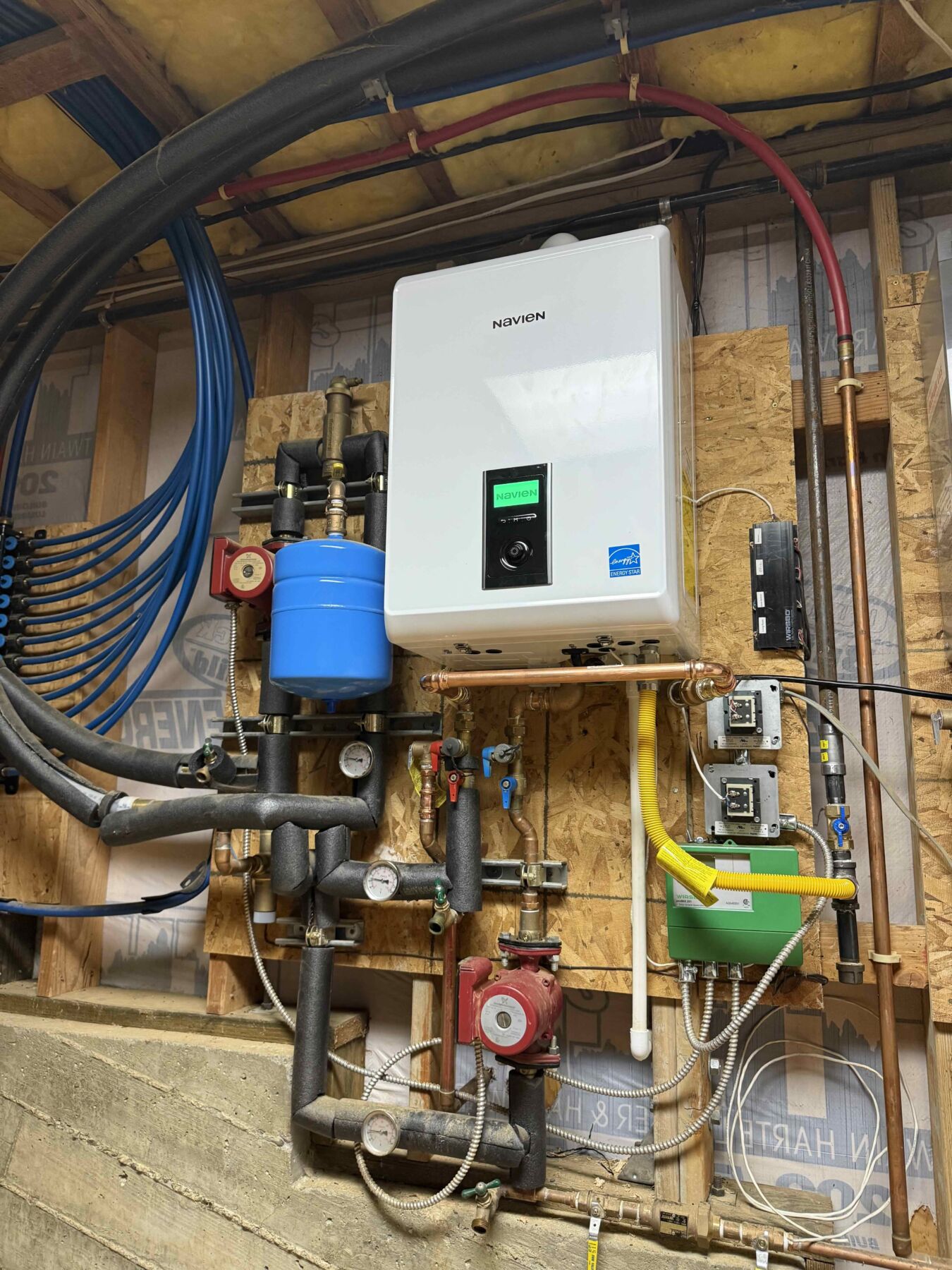
The existing system was being heated by a tankless water heater being used as a boiler. We replaced that unit with a Navien NHB-150 high-efficiency boiler designed specifically for hydronic space heating and connected it back into the existing radiant system.
Replacing the Heat Source Without Rebuilding Everything
When an existing radiant system is otherwise functioning properly, replacing every component is not always necessary.
For this project, we were able to retain much of the existing system, including:
- Three radiant heating zones
- Original thermostats
- Existing zone valves
- Original zone controller
- Existing distribution piping
- Other usable hydronic components
The new Navien boiler was integrated with those existing components so the three heating zones could continue operating as they had before.
That approach can reduce both the cost and disruption of a boiler replacement while still upgrading the most important component of the system.
From a Tankless Water Heater to a Dedicated Boiler
Tankless water heaters and hydronic boilers may look similar from the outside, but they are designed for different primary applications.
The previous system used a tankless water heater as the heat source for the radiant system.
For the replacement, we installed a Navien NHB-150, a boiler designed specifically for closed-loop hydronic heating applications.
A dedicated boiler gives us equipment designed around the flow, temperature control and operating requirements of a space-heating system rather than domestic hot-water production.
Keeping Existing Radiant Zones in Service
The house already had three separate radiant heating zones.
Each zone could call for heat through the existing thermostats and zone-valve control system. Because those components were still usable, there was no reason to replace them simply because the heat source was being upgraded.
The new boiler was connected into the existing controls and distribution system so the homeowner could continue using the existing three-zone radiant setup.
This is an important part of boiler replacement work: determining what actually needs to be replaced and what can reasonably remain in service.
Evaluating the Whole Hydronic System
Before connecting a new boiler to an existing radiant system, we look beyond the boiler itself.
Items that may need to be evaluated include:
- Existing pumps and circulators
- Zone valves
- Thermostats
- Zone controls
- Expansion tank
- Air elimination
- Supply and return piping
- System pressure
- Operating temperatures
- Condition of existing components
A boiler replacement should leave the entire heating system operating properly, not simply put a new appliance on the wall.
Whenever existing components can be safely and reliably reused, we prefer not to replace equipment unnecessarily.
A Difficult Installation Location
This particular boiler changeout also had an unusual access challenge.
The boiler is mounted high on a wall underneath the house, and the ground below the work area is on a steep sideways slope.
That made positioning the boiler, working on the piping and completing the connections more difficult than a typical mechanical-room installation.
Projects like this are another reason boiler replacement pricing can vary considerably from one house to another. The boiler itself is only part of the job. Access, working conditions, existing piping and how much of the original system can be reused all affect the installation.
Boiler Replacement Can Preserve an Existing Radiant System
Radiant heating systems can last a long time, particularly the tubing installed within floors or slabs.
If the distribution system, controls and zoning are still functioning, a failed or outdated heat source does not necessarily mean the entire radiant system needs to be rebuilt.
In many cases, the better solution is to evaluate the existing system, preserve the components that are still performing properly and replace only what actually needs upgrading.
On this project, that meant replacing the existing tankless heat source with a Navien NHB-150 boiler while retaining the three-zone radiant system and much of its original control equipment.
Boiler & Radiant Heating Service
Optimized Plumbing & Piping installs, replaces and services boilers, radiant floor heating and hydronic heating systems.
Whether the project requires a complete redesign or simply replacing an aging boiler while retaining an existing radiant system, we evaluate the entire installation and recommend the work that actually makes sense.
Optimized Plumbing & Piping
Boiler, radiant heat and hydronic system service and installation.