
What Happens During a Standard Gas Water Heater Replacement?
A standard gas water heater replacement may look simple from the outside: remove the old tank, install a new one and reconnect the plumbing.
In reality, a professional water heater changeout involves checking much more than the tank itself.
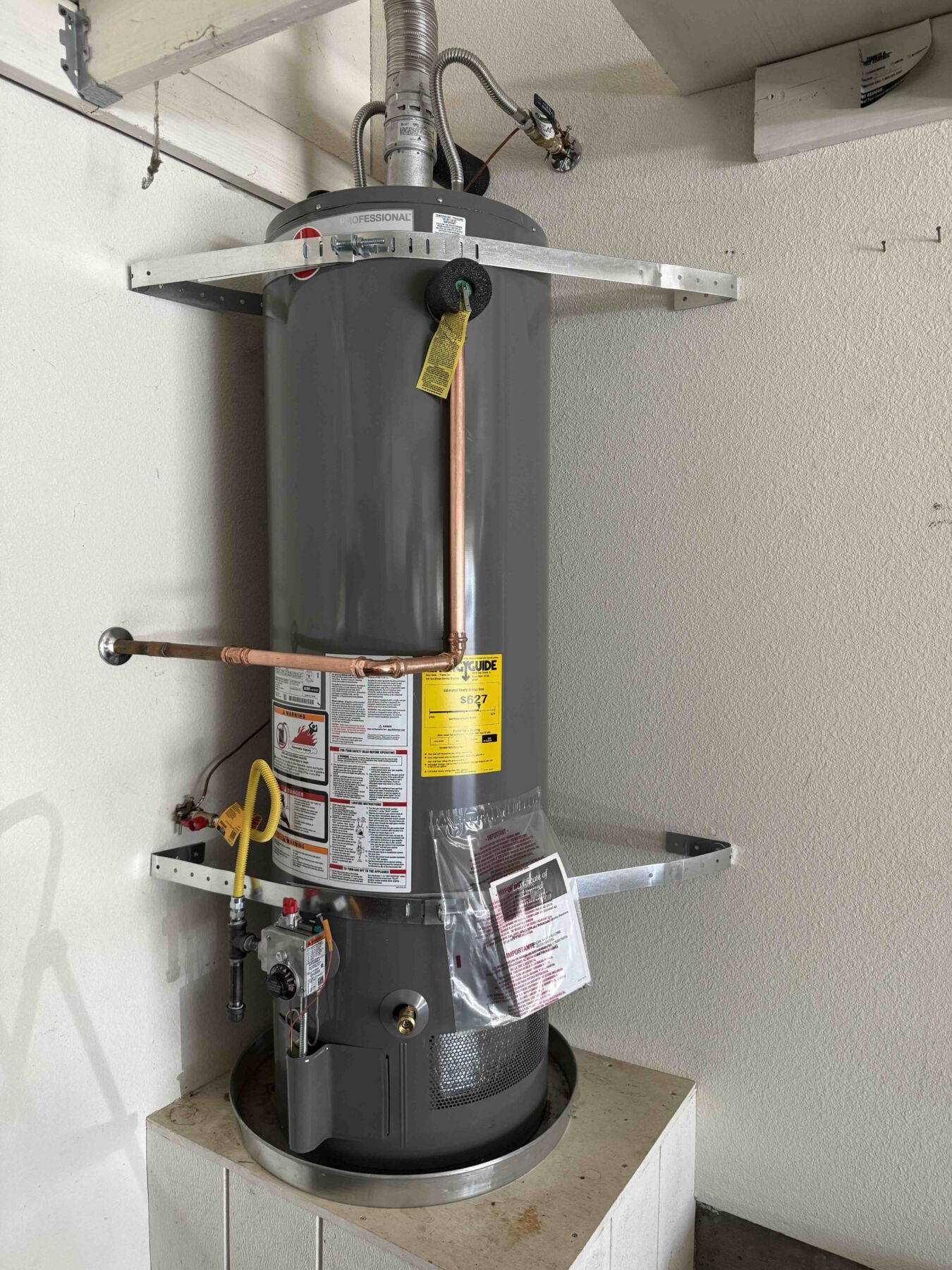
Every installation is a little different, but there are several components we routinely inspect and update as needed to make sure the new water heater is installed properly, safely and in a way that makes sense for the existing home.
Removing the Old Water Heater
The first step is safely shutting down the existing water heater.
That typically involves:
- Shutting off the gas supply
- Shutting off the water supply
- Draining the existing tank
- Disconnecting the hot and cold water piping
- Disconnecting the gas connection
- Disconnecting the vent
- Removing the old water heater from the installation area
Once the old tank is out, we can get a much better look at the existing valves, piping, venting and surrounding installation.
Checking the Water Shutoff Valve
The water-heater shutoff valve is an important part of the installation, especially when the water heater eventually needs service.
Older valves do not always shut the water off completely or may be difficult to operate after years without use.
When necessary, we shut off the home’s water supply and replace the existing water-heater shutoff valve before installing the new tank.
This gives the homeowner a reliable way to isolate the water heater in the future without shutting water off to the entire house.
Gas Valve, Connector and Sediment Trap
The existing gas connection also needs to be evaluated.
Depending on its age and condition, we may replace the gas shutoff valve and flexible gas connector when installing the new water heater.
We also install or correct the sediment trap, often called a dirt leg, as needed.
The purpose is to help keep debris in the gas piping from entering the water heater’s gas control and burner assembly.
When gas to the home has to be shut off as part of the work, we also restore service and relight or verify other affected gas appliances before leaving.
T&P Relief Valve Discharge Piping
Every tank-type water heater has a temperature and pressure relief valve, commonly called the T&P valve.
Its discharge piping is an important safety component.
If the existing T&P discharge line is properly installed and suitable for reuse, we may connect the new water heater to it.
However, we frequently find older installations where the T&P piping does not terminate appropriately or has other problems.
When that happens, we install a new discharge line and route it to a suitable termination location rather than simply reconnecting an incorrect installation.
Seismic Straps
In California, seismic restraint is an important part of a tank water heater installation.
We install or update the water-heater straps as needed so the new tank is properly secured.
This is another detail that can easily be overlooked when someone thinks of a water-heater replacement as simply exchanging one tank for another.
Drain Pan and Drainage
A drain pan may also be appropriate or required depending on where the water heater is installed and what could be damaged if the tank leaked.
When needed, we install a pan beneath the new water heater and provide drainage from the pan to an appropriate location.
The goal is to reduce the potential for water damage if the tank or one of its connections develops a leak in the future.
Can the Existing Vent Be Reused?
Not every component needs to be replaced just because the water heater is new.
If the existing venting is in good condition, appropriately sized and suitable for the new water heater, it may be reused.
We inspect the existing vent and determine whether it can remain or whether modifications are necessary.
The same philosophy applies throughout the installation: reuse what is appropriate and serviceable, and replace what actually needs attention.
Checking Combustion and Final Operation
After a gas water heater is installed and operating, we also verify that the appliance is burning and venting properly.
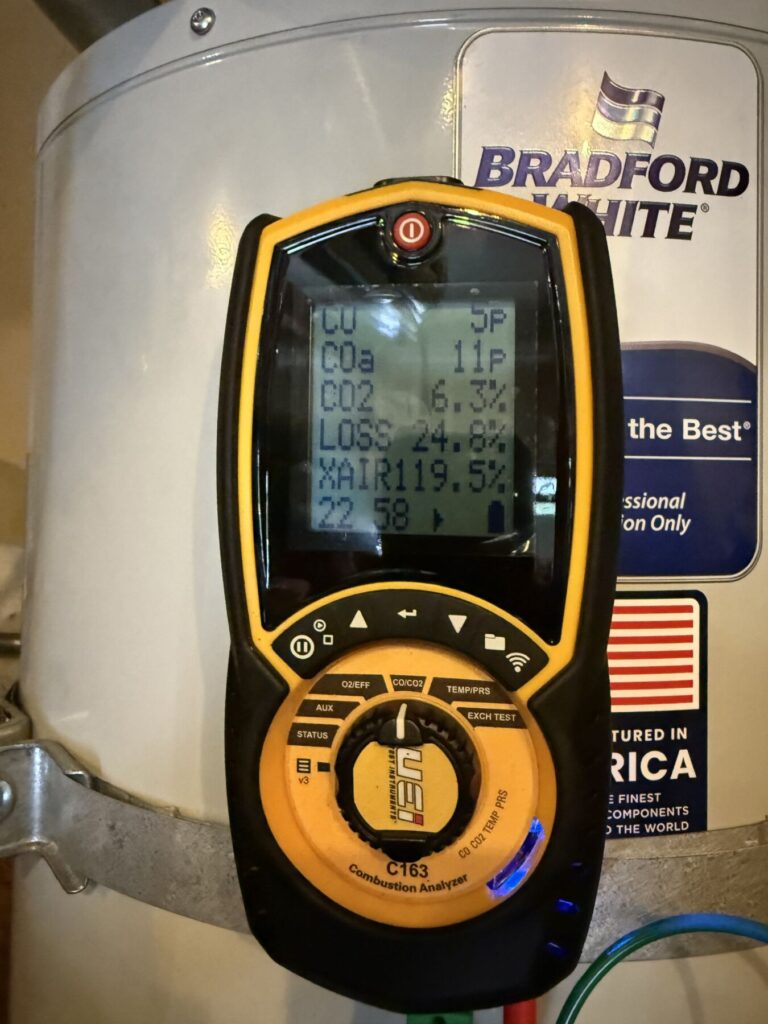
When appropriate, we use a combustion analyzer to check the operating characteristics of the water heater rather than relying only on the appearance of the flame.
This provides additional information about how the appliance is performing after installation and helps us verify that the finished system is operating as intended.
The goal is not simply to get the burner lit. We want to know that the water heater is operating properly once the installation is complete.
Connecting and Testing the New Water Heater
After the new water heater is positioned and secured, we complete the water, gas, vent and safety connections.
Before considering the job complete, we check the installation for proper operation and leaks and make sure the water heater is functioning as intended.
A finished installation should not only produce hot water. The valves, gas connection, venting, safety piping and surrounding components should also be left in good working order.
Fast Water Heater Replacement When Hot Water Fails
A failed water heater is rarely something a homeowner planned for.
One recent customer called us at approximately 8:30 in the morning with a water heater problem that was beyond repair. By mid-afternoon, the replacement had been completed.
The homeowner later left a five-star review describing the service as professional and recommending Optimized Plumbing & Piping.
Another customer contacted us after his water heater failed. We arrived the following morning with the water heater needed for the home and completed the replacement that same day.
While availability and installation requirements vary from job to job, we understand that losing hot water is disruptive and make timely replacement a priority whenever possible.
More Than Just Swapping Tanks
A good water heater replacement should address the complete installation, not just the appliance.
That can mean evaluating or updating:
- Water shutoff valves
- Gas valves and connectors
- Sediment traps
- T&P discharge piping
- Seismic restraints
- Drain pans and drainage
- Venting
- Existing water connections
- Combustion and final appliance operation
- Other gas appliances affected by a gas shutdown
Some installations need only minor changes. Others reveal older components that should be corrected while the water heater is already being replaced.
Our goal is to complete the work correctly without replacing parts unnecessarily.
Gas Water Heater Repair & Replacement
Optimized Plumbing & Piping installs and replaces standard gas and propane tank water heaters along with electric, tankless and hybrid heat pump systems.
If your water heater is leaking, no longer producing hot water or is approaching the end of its useful life, we can evaluate the existing installation and explain the available replacement options. Water heater replacement options
Optimized Plumbing & Piping
Water heater repair and replacement.