
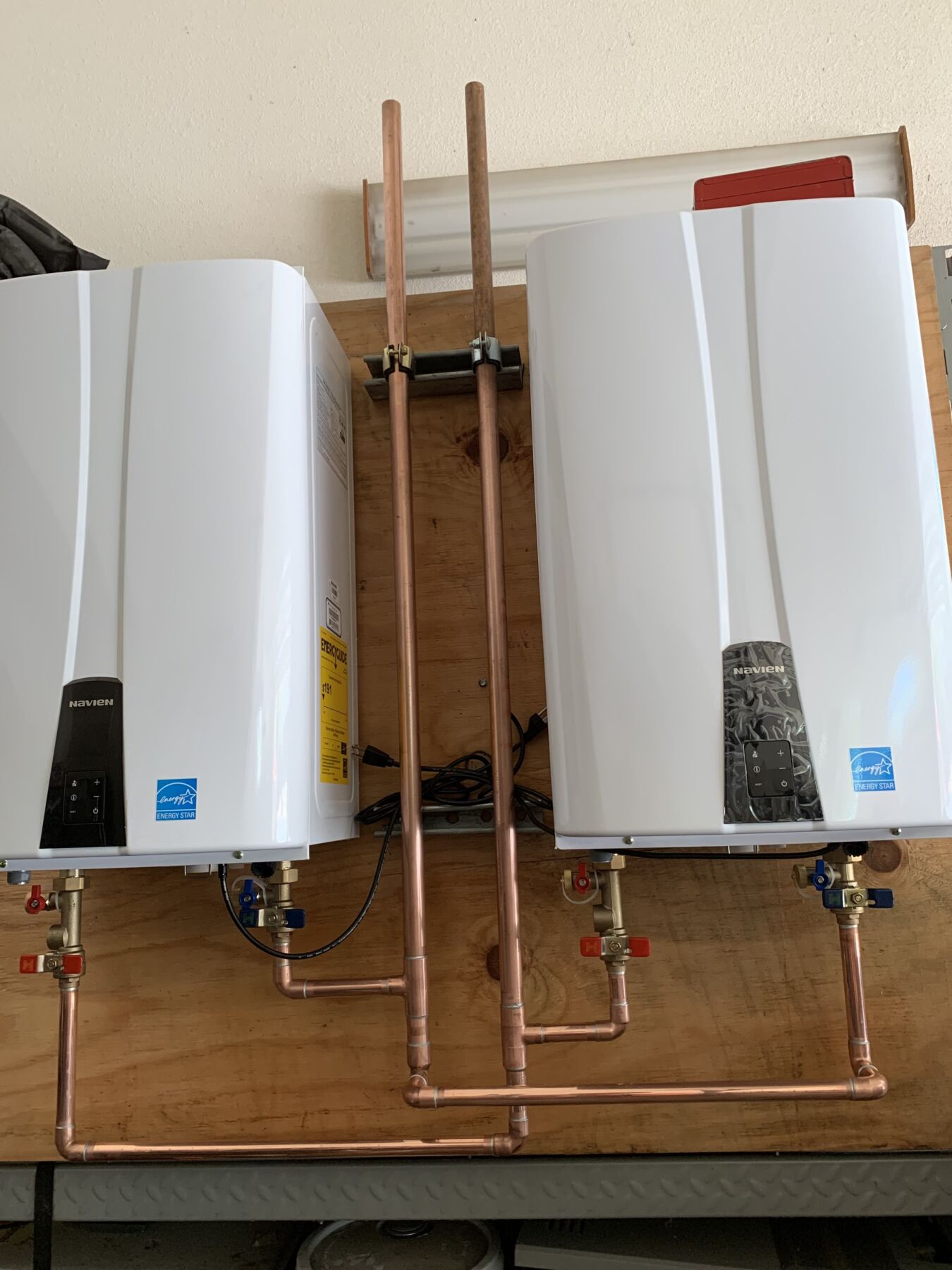
How Fast Can You Convert a Tank Water Heater to Tankless?
When a tank water heater fails, homeowners considering tankless often assume the conversion will require several days without hot water.
In many homes, that is not the case.
A straightforward tank-to-tankless water heater conversion can often be completed in a single working day, although the actual time depends on the existing gas supply, venting, water piping, condensate drainage, electrical access and installation location.
We have completed same-day tankless conversions, but we evaluate each installation before promising a schedule.
A Tankless Conversion Is More Than Removing One Heater and Hanging Another
Replacing a tank water heater with another similar tank can be relatively straightforward because much of the existing infrastructure may already be suitable.
Converting to tankless requires us to look at the entire installation.
That can include:
- Removing and disposing of the existing tank
- Selecting and mounting the tankless water heater
- Modifying hot- and cold-water piping
- Installing tankless service valves
- Evaluating and modifying the gas supply
- Installing new venting
- Providing condensate drainage
- Adding a condensate pump or neutralizer when appropriate
- Providing electrical power where required
- Starting and testing the new unit
- Setting operating parameters
- Explaining operation and maintenance to the homeowner
How much of that work is necessary varies substantially from house to house.
First Step: Remove the Existing Tank
The existing water heater has to be shut down, drained, disconnected and removed.
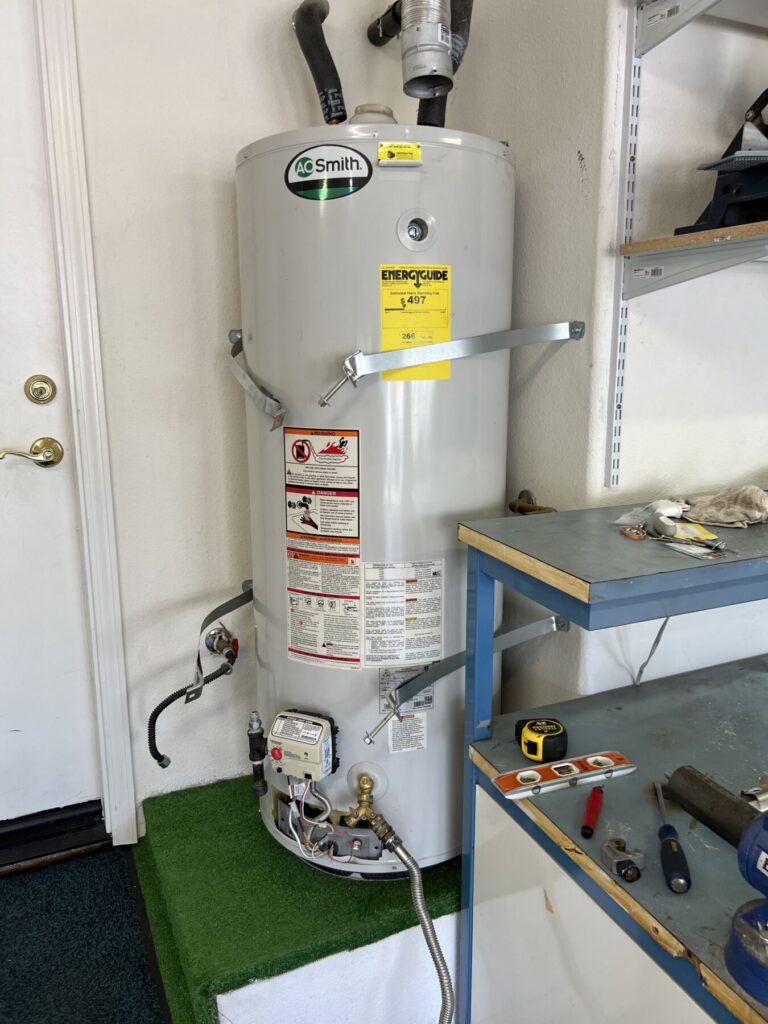
A conventional tank takes up a considerable amount of floor space. Once it is gone, we often have a good wall area available for the tankless unit.
The before photo shown with this article is from an actual tank-to-tankless conversion and shows the conventional gas tank before removal.
Mounting the New Tankless Water Heater
Once the tank is removed, the tankless unit can be positioned on the wall.
This immediately changes the amount of usable space in the mechanical area because the new water heater no longer occupies the floor.
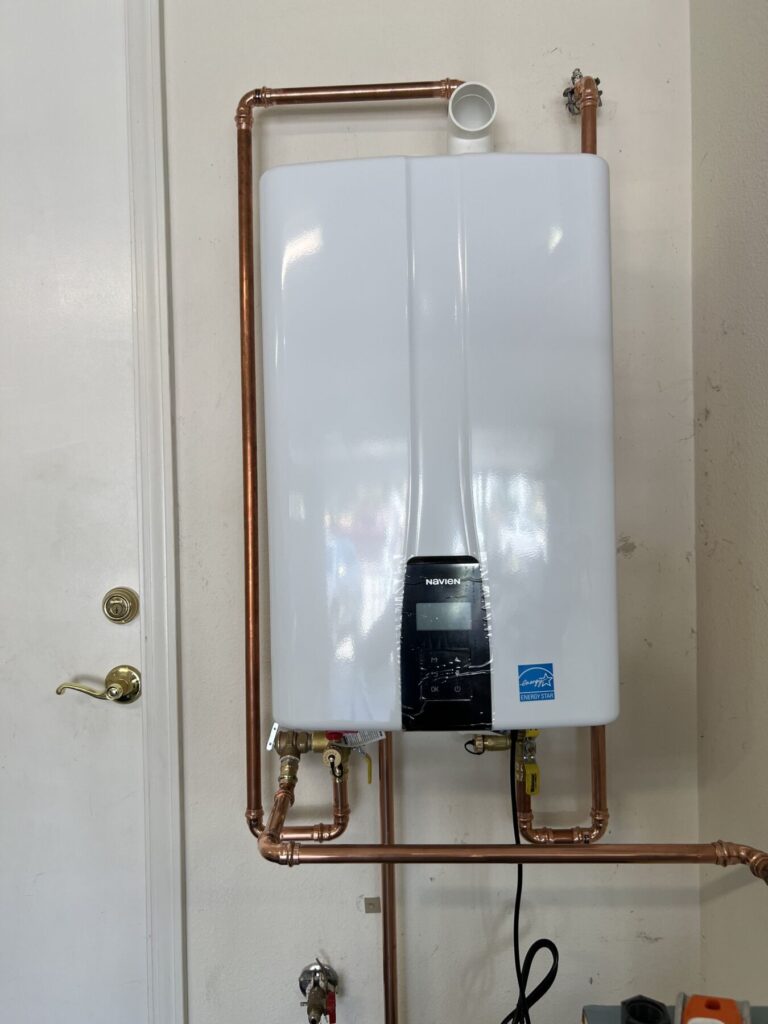
The tankless installation photo shown here was taken during a separate tank-to-tankless conversion while the work was still in progress.
At that stage, the Navien unit had been mounted and much of the water and gas piping had been completed, but the venting had not yet been finished.
That is a good example of why a tankless installation should not be judged until all components of the conversion are complete.
Gas Supply Can Determine How Simple the Conversion Is
One of the biggest variables is the gas system.
Tankless water heaters generally have significantly higher maximum burner input than conventional tank water heaters.
Before converting, we evaluate:
- Existing gas-pipe size
- Length of the gas run
- Other gas appliances
- Available gas pressure
- Propane regulator capacity when applicable
- Total BTU demand
Sometimes the existing gas piping can support the new heater.
Other installations require gas piping modifications before the tankless unit can operate at its full capacity.
This is one of the things that can turn a relatively simple conversion into a more involved project.
Venting Usually Changes
Tankless water heaters typically use a different venting system than the tank water heater they replace.
Modern condensing tankless units commonly use approved plastic venting systems rather than the metal vent used by many conventional tanks.
The old vent therefore cannot simply be assumed to work with the new equipment.
We evaluate the proposed vent route, allowable equivalent length, termination location and manufacturer requirements before completing the installation.
In many homes, venting can still be completed during the same visit.
Condensate Has to Go Somewhere
High-efficiency condensing tankless water heaters produce condensate during normal operation.
That means the installation requires a drainage plan.
If a suitable drain is nearby and below the water heater, we may be able to use gravity drainage.
When gravity drainage is not practical, a condensate pump may be used to move the condensate to an appropriate location.
Depending on the drainage system and installation, a condensate neutralizer may also be appropriate.
These details are part of the planning that should happen before the conversion begins.
Tankless Service Valves Are Part of Our Installation
Our tankless installations include a brass service-valve set.
These valves make it possible to isolate the water heater and connect flushing equipment for future heat-exchanger maintenance.
That becomes important over the life of the tankless unit because periodic service may be recommended based on water quality, usage and manufacturer guidance.
Some homeowners choose to perform their own flushing using these connections, while others have us perform the service.
Either way, installing the service valves from the beginning makes future maintenance substantially easier.
Can a Direct-Vent Tank Be Converted to Tankless the Same Day?
Yes, sometimes.
One customer contacted us because his direct-vent water heater needed replacement.
After reviewing the installation, we suggested tankless as an alternative and provided a quote.
He chose the tankless system.
The conversion was completed that same day.
In his five-star Yelp review, he wrote that we:
“stayed on budget, and completed the work same day.”
He also noted that there were no additional trips required and that we explained the available options and demonstrated how to use and maintain the new tankless system.
That is a good example of what can be accomplished when the existing conditions allow for a straightforward conversion.
Another Urgent Tankless Replacement
Another homeowner contacted us with a leaking water heater and originally had a hybrid heat-pump water heater in mind.
After evaluating the installation and discussing the available options, we determined that the hybrid system was not a good fit for that particular situation.
The homeowner chose an on-demand tankless water heater instead.
Because the existing tank was leaking, we rearranged our schedule and returned the following day to complete the replacement.
That customer later described the work as:
“Professional. High Attention to detail.”
Different homes require different solutions, which is why we prefer to look at the actual installation rather than recommend the same water heater for everyone.
What Can Slow Down a Tankless Conversion?
Although many conversions can be completed quickly, several conditions can add time.
These can include:
- Undersized gas piping
- Difficult vent routes
- Limited access
- Long piping modifications
- No practical condensate drain
- Electrical work that must be completed
- Significant code corrections
- Difficult removal of the existing tank
- Unusual mounting locations
- Additional recirculation work
A straightforward garage installation can be very different from a water heater located in an attic, crawlspace or tightly finished interior closet.
Planning Ahead Makes Same-Day Work More Likely
The fastest conversions are usually the ones where the installation has been evaluated before work begins.
Knowing the correct tankless model, gas requirements, vent route and condensate plan allows us to arrive prepared with the materials needed to complete the conversion.
That is why photos and an initial site evaluation can be valuable.
The goal is to minimize surprises once the home’s hot water has been shut down.
How Long Will Your Tank-to-Tankless Conversion Take?
For a relatively straightforward installation, one working day may be realistic.
More complicated installations can take longer.
Rather than advertise every tankless conversion as a guaranteed same-day job, we prefer to evaluate:
- The existing water heater
- Gas supply
- Venting
- Plumbing configuration
- Electrical availability
- Condensate drainage
- Access
- Recirculation needs
Once those items are understood, we can give the homeowner a much better idea of what the conversion will involve.
Tank-to-Tankless Water Heater Conversions
Optimized Plumbing & Piping installs and services tankless water heaters and converts conventional gas and propane tank systems to tankless.
If an existing water heater has failed, we can evaluate whether another tank or a tankless conversion makes more sense and explain what would be required to complete the work.
In many homes, upgrading to tankless does not mean being without hot water for several days.
With proper planning and suitable existing conditions, the conversion may be completed in a single working day.
Optimized Plumbing & Piping
Tankless water heater installation, conversion and service.